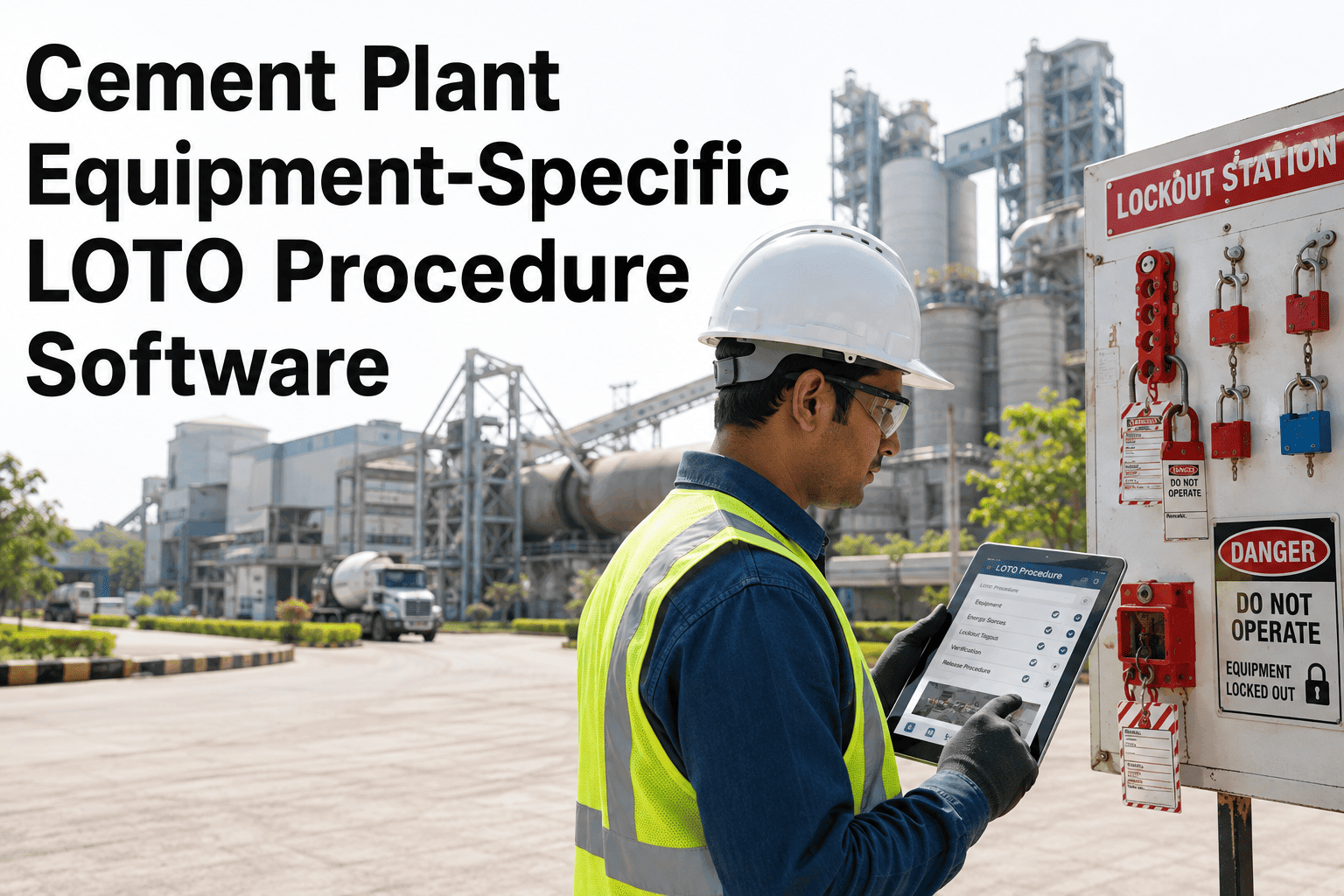
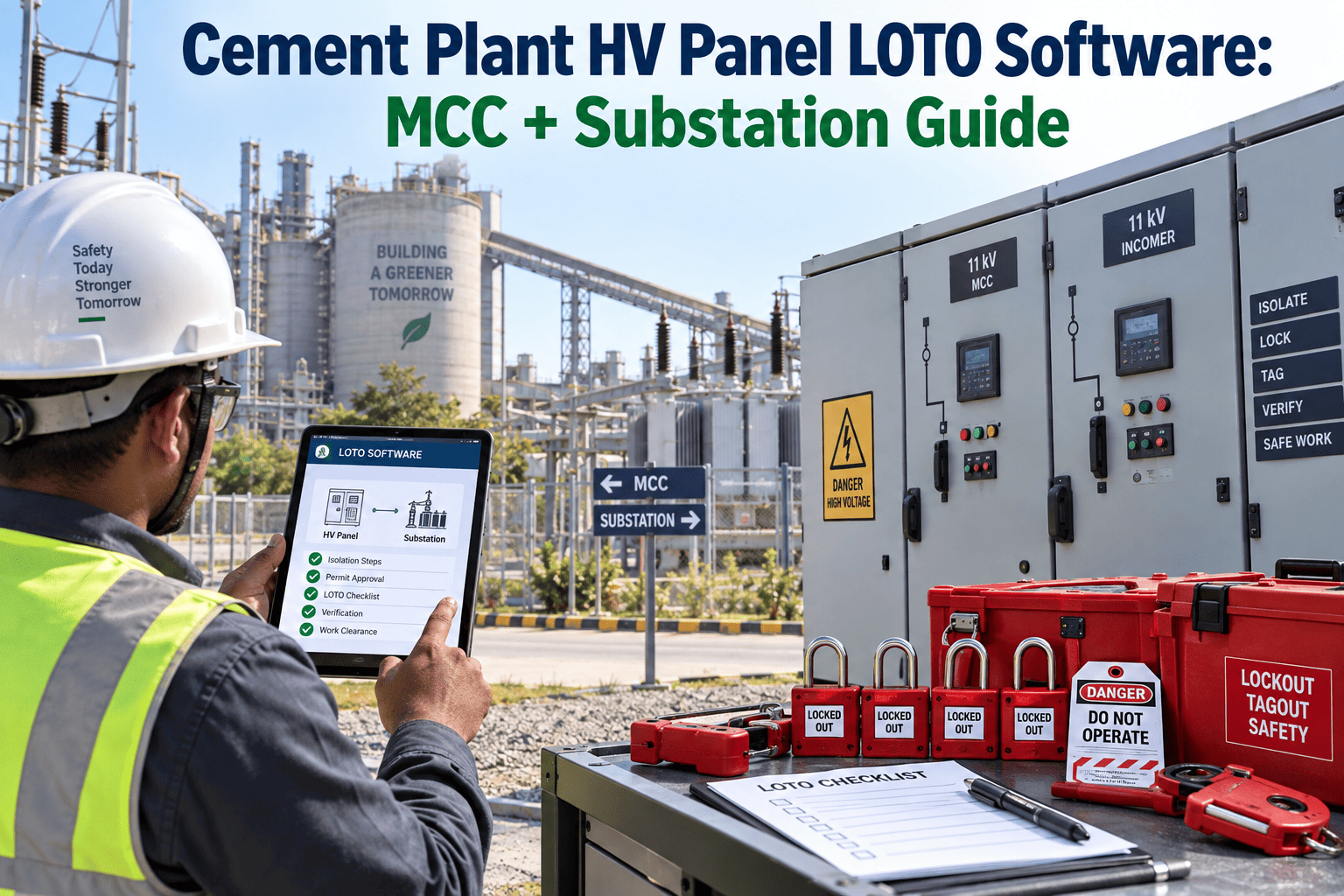
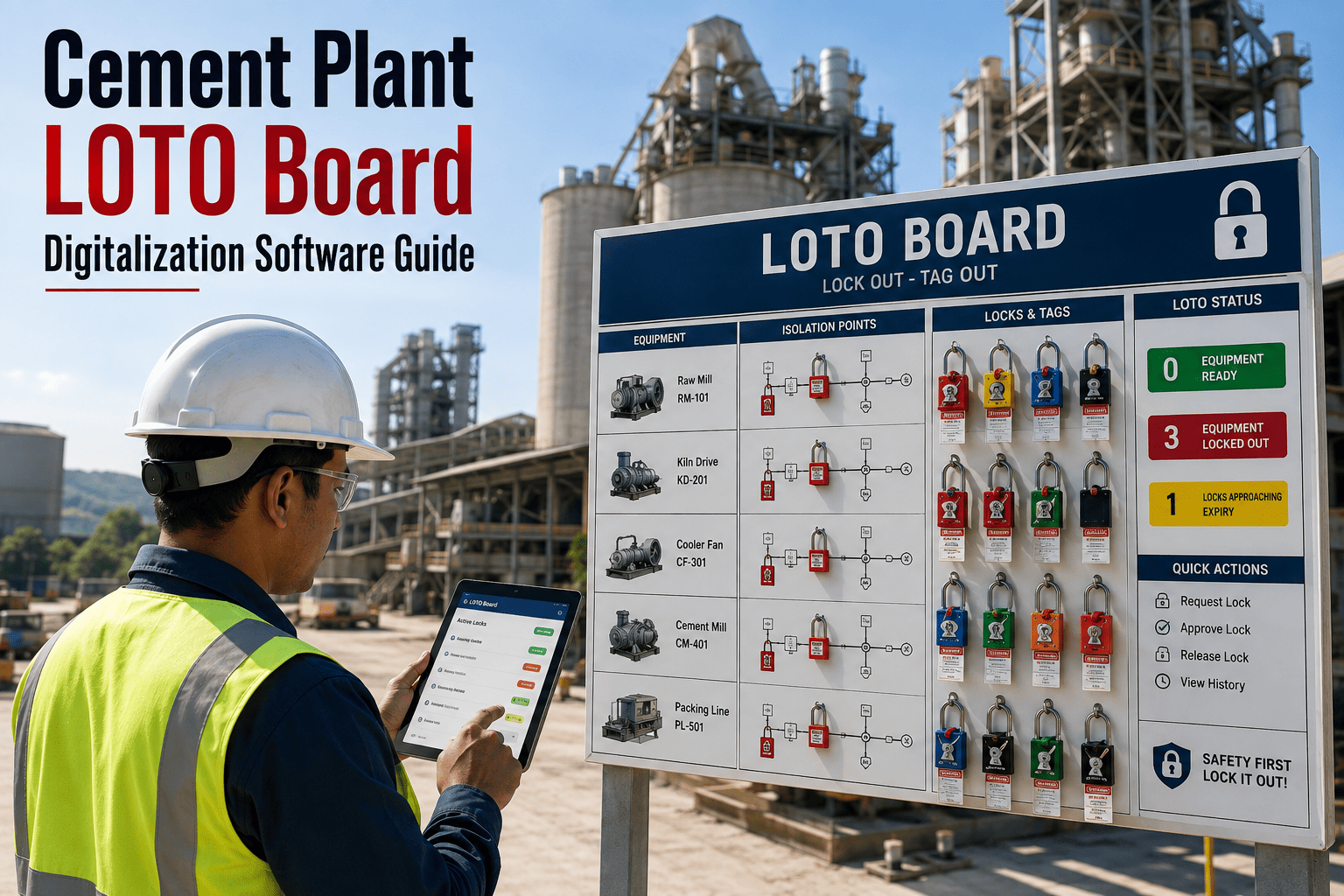
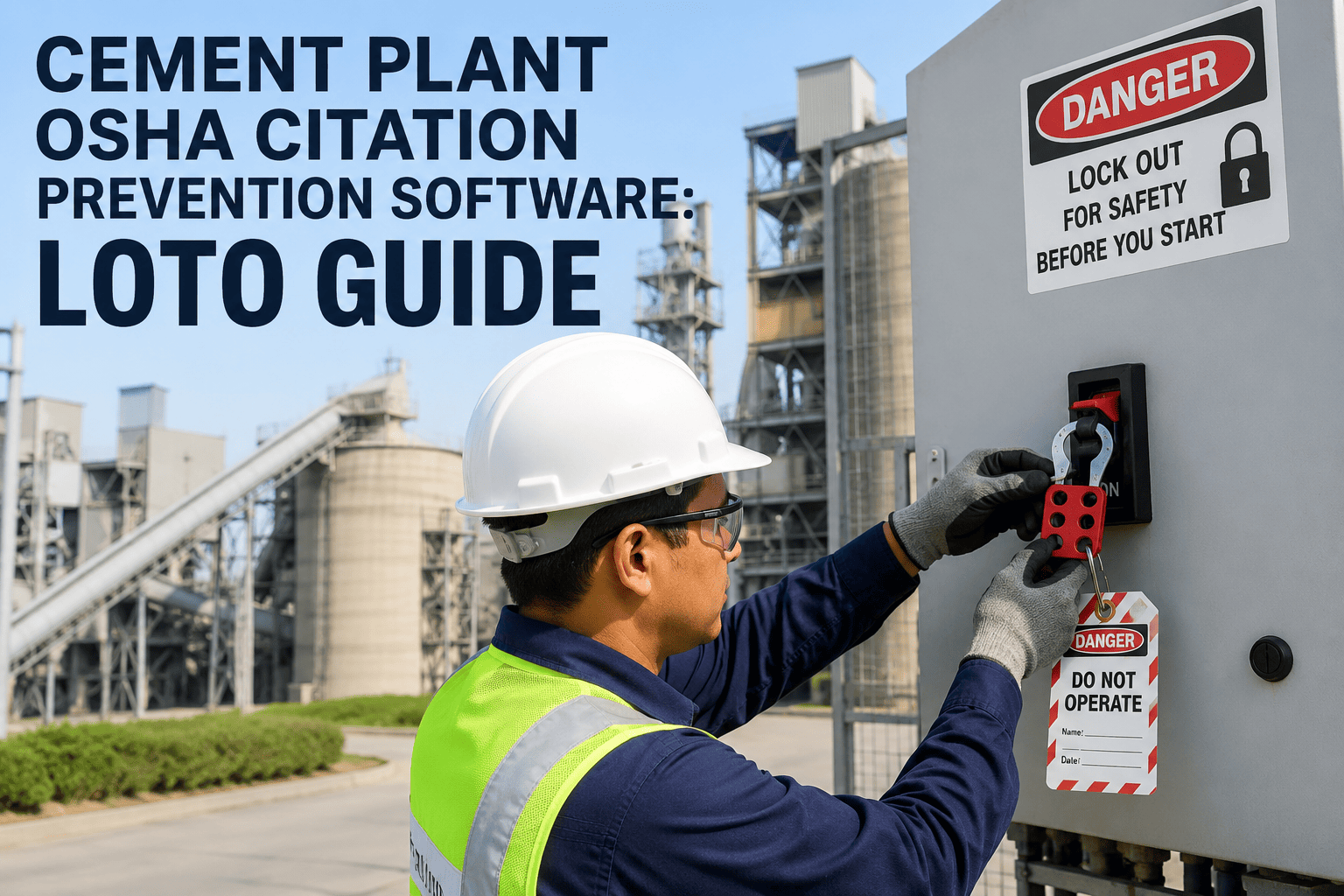
Cement plants run some of the most dangerous rotating and stored-energy equipment in heavy industry, and a single generic lockout tag out sheet cannot safely cover a kiln drive, a raw mill, an ID fan, and a belt conveyor with one set of steps. OSHA 1910.147 requires a written, equipment-specific procedure for every machine with a distinct energy source, isolation point, and stored-energy hazard, yet most plants still rely on laminated binders that go missing, get copied across dissimilar machines, and fall out of date the moment a valve or breaker is relocated. OxMaint's cement plant equipment-specific LOTO procedure software gives reliability, EHS, and operations teams a single digital library where every kiln, mill, crusher, fan, and conveyor has its own verified isolation steps, tied directly to work orders and technician sign-off. See how it fits your plant by visiting app.oxmaint.ai.
Why Generic LOTO Sheets Fail Cement Operations
Cement production spans dozens of equipment families with wildly different energy profiles: electrical drives on kiln motors, pneumatic actuators on baghouse dampers, hydraulic tensioners on conveyor belts, and gravity-fed stored energy in silos and hoppers. A generic checklist that says "lock the breaker and verify zero energy" ignores the specific number of isolation points, the sequence in which they must be de-energized, and the verification method unique to that asset. Regulators and internal auditors increasingly expect plants to demonstrate machine-specific documentation, not shared templates, which means the gap between paper-based generic sheets and true equipment-specific procedures has become one of the most cited findings during safety audits at integrated cement facilities.
1,200+
isolation points tracked
Average number of distinct energy isolation points across a single integrated cement plant
42%
of citations
Share of OSHA general industry LOTO citations tied to missing or generic machine-specific procedures
6.5 hrs
saved per shutdown
Typical technician time saved per major shutdown when digital equipment-specific steps replace paper binders
What an Equipment-Specific LOTO Procedure Actually Requires
A compliant procedure is more than a checklist; it is a structured record tied to one machine and one machine only. Below are the core components that separate a defensible, audit-ready procedure from a shared template that only looks compliant.
Isolation Points
Machine-Specific Energy Sources
Every kiln drive, mill gearbox, and conveyor head pulley gets its own documented list of electrical, mechanical, hydraulic, and pneumatic isolation points, mapped to the exact breaker, valve, or disconnect on that asset.
Sequencing
Step-by-Step De-Energization Order
Kilns and mills often require a strict shutdown sequence to avoid thermal shock or mechanical binding, so the procedure captures the exact order technicians must follow before applying locks.
Stored Energy
Residual and Stored Energy Checks
Silos, hoppers, tensioned belts, and hydraulic accumulators hold energy long after the main isolation point is locked, so each procedure lists the specific bleed-down or verification step required.
Verification
Zero-Energy Confirmation Method
Whether it is a voltage test on a mill motor or a pressure gauge check on a pneumatic damper, the exact verification method is documented so any technician can confirm zero energy state consistently.
Authorization
Named Authorized and Affected Employees
Each procedure records who is authorized to apply and remove locks on that specific machine, plus which affected employees must be notified before work begins.
Review Cycle
Periodic Procedure Audits
Procedures are reviewed on a recurring schedule and whenever equipment is modified, ensuring the document in the field always matches the machine as it is actually configured today.
Stop copying one LOTO sheet across ten different machines. Build a verified, equipment-specific procedure library for every kiln, mill, and conveyor in your plant with OxMaint.
Comparing Paper Binders, Spreadsheets, and Digital LOTO Libraries
Plants typically manage LOTO procedures using one of three approaches. The table below compares how each approach holds up against the demands of a multi-unit cement facility, from procedure accuracy to audit readiness.
| Capability |
Paper Binders |
Shared Spreadsheets |
OxMaint Digital Library |
| Machine-specific isolation steps |
Inconsistent, often copied |
Manually maintained |
Structured per asset ID |
| Linked to active work order |
No |
Rarely |
Automatic |
| Update when equipment changes |
Slow, manual reprint |
Manual edit, easy to miss |
Version-controlled updates |
| Technician sign-off trail |
Paper signature only |
None |
Digital timestamped log |
| Audit retrieval time |
Hours of searching |
Minutes, if organized |
Seconds, filterable by asset |
| Multi-site standardization |
Not possible |
Difficult to enforce |
Centralized templates |
How OxMaint Structures Equipment-Specific LOTO for Cement Assets
Cement plants that move from generic sheets to a true digital library see the biggest gains in the four areas below, each of which maps directly to a step in a technician's daily workflow.
Asset-Linked Procedure Records
Every kiln, raw mill, cement mill, crusher, fan, and conveyor in the CMMS asset registry carries its own LOTO procedure, so technicians pull up the correct steps by scanning or searching the asset tag rather than hunting through a shared binder.
Work Order Enforcement
When a work order is raised against a locked-out asset, the system requires the linked procedure to be acknowledged before the job can be started or closed, preventing technicians from skipping steps under time pressure.
Version Control and Change Tracking
Whenever an isolation point, valve, or breaker is relocated or replaced, the procedure is updated and versioned in place, so the field copy technicians see always reflects the current configuration of the machine.
Authorized Employee Rosters
Each procedure carries its own list of authorized employees permitted to apply and remove locks on that specific machine, reducing the risk of an untrained technician isolating equipment they are not certified for.
Before and After: Moving to Equipment-Specific Digital LOTO
Paper-Based Generic LOTO
One shared procedure copied across multiple dissimilar machines
Isolation points recorded from memory rather than verified records
No link between the procedure and the active work order
Outdated steps after equipment modifications go unnoticed
Audit preparation requires days of binder searching
OxMaint Digital Equipment-Specific LOTO
Dedicated procedure record for every individual machine
Isolation points and verification steps documented and versioned
Procedure acknowledgement required inside every work order
Automatic update prompts when asset records change
Filterable, exportable audit trail in seconds
Give every kiln, mill, fan, and conveyor its own verified LOTO procedure, linked directly to your work orders and ready for the next audit.
Rolling Out Equipment-Specific LOTO Across Your Plant
Building a full procedure library does not need to happen all at once. Most cement plants follow the staged approach below to move from generic sheets to a verified, machine-specific library within a single planned shutdown cycle.
1
Audit Existing Isolation Points
Walk each kiln, mill, and conveyor with EHS and maintenance to confirm the actual breakers, valves, and disconnects in use today, since field conditions frequently diverge from old paper records.
2
Build One Procedure per Asset
Create a dedicated procedure record in OxMaint for each machine, capturing sequencing, stored-energy checks, and the verification method specific to that asset.
3
Link Procedures to Work Orders
Attach the verified procedure to every recurring and reactive work order for that asset, so technicians see the correct steps automatically whenever the job is opened.
4
Set a Recurring Review Cadence
Schedule periodic reviews and trigger ad-hoc updates whenever equipment is modified, keeping every procedure current between shutdowns.
Before OxMaint, our kiln and raw mill crews were working from the same generic binder, and it showed during our last audit. Now every asset has its own verified procedure tied to the work order, and our EHS team can pull a full history in under a minute.
Maintenance Manager, Integrated Cement Plant
Frequently Asked Questions
What makes a LOTO procedure equipment-specific rather than generic?
An equipment-specific procedure documents the exact isolation points, sequencing, and verification method for one machine only, rather than a shared checklist applied across dissimilar equipment. Learn more at
app.oxmaint.ai.
How does OxMaint link LOTO procedures to work orders?
Each asset record carries its own procedure, and any work order raised against that asset requires the technician to acknowledge the linked steps before the job can proceed or close.
Can procedures be updated when equipment configuration changes?
Yes, procedures are version-controlled, so updating an isolation point or verification step after an equipment change automatically replaces the field copy technicians see next.
Does this help with OSHA and MSHA audit preparation?
The digital library keeps a timestamped sign-off trail for every procedure, so audit teams can retrieve machine-specific records and history in seconds instead of searching paper binders.
How long does it take to build a full plant procedure library?
Most plants complete an initial library during one planned shutdown cycle by auditing isolation points first, then documenting each asset's procedure in OxMaint. Book a walkthrough at
calendly.com/oxmaintapp/30min.
Give Every Machine Its Own Verified LOTO Procedure
Replace shared binders with a structured, audit-ready procedure library built for kilns, mills, fans, and conveyors across your cement plant.