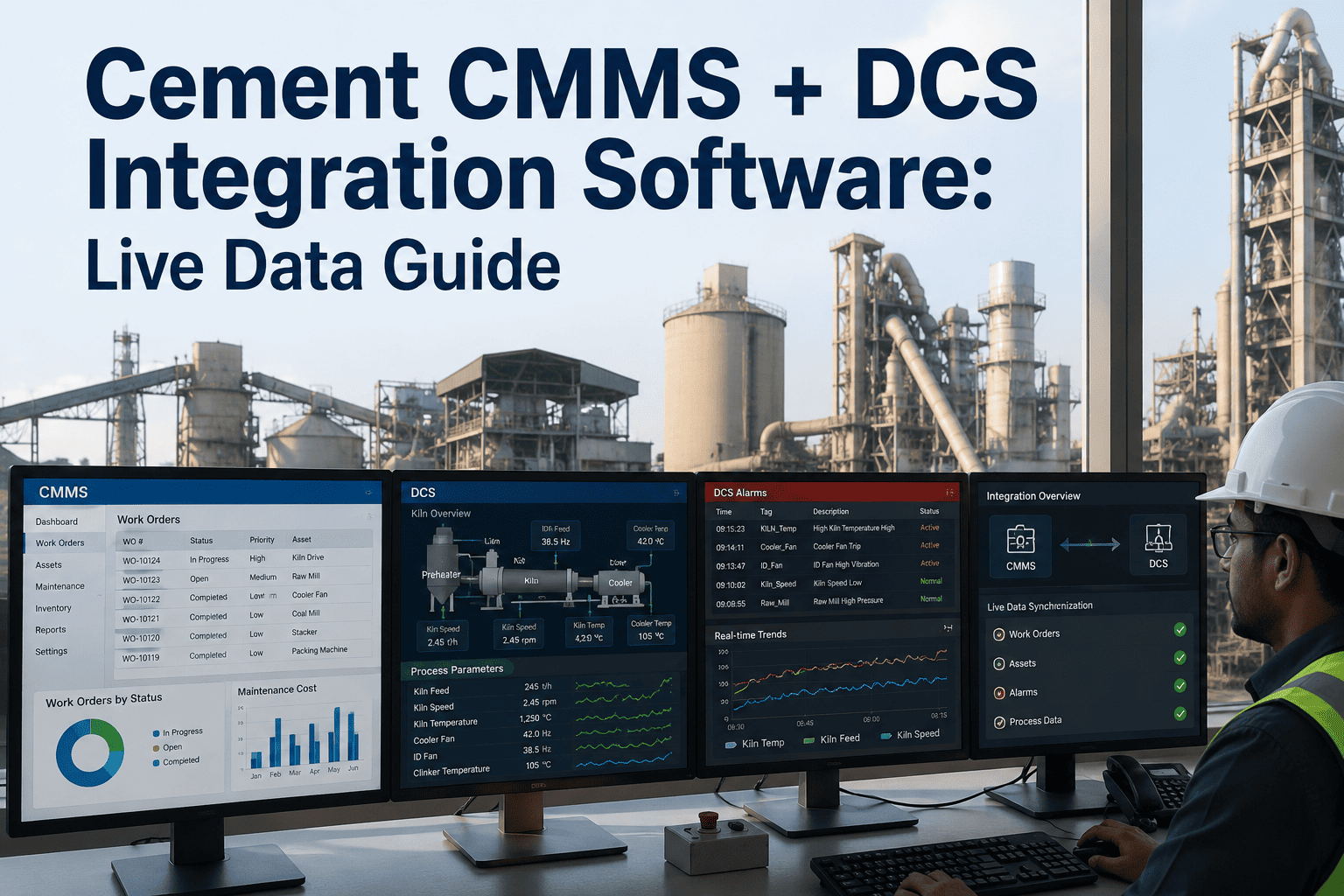
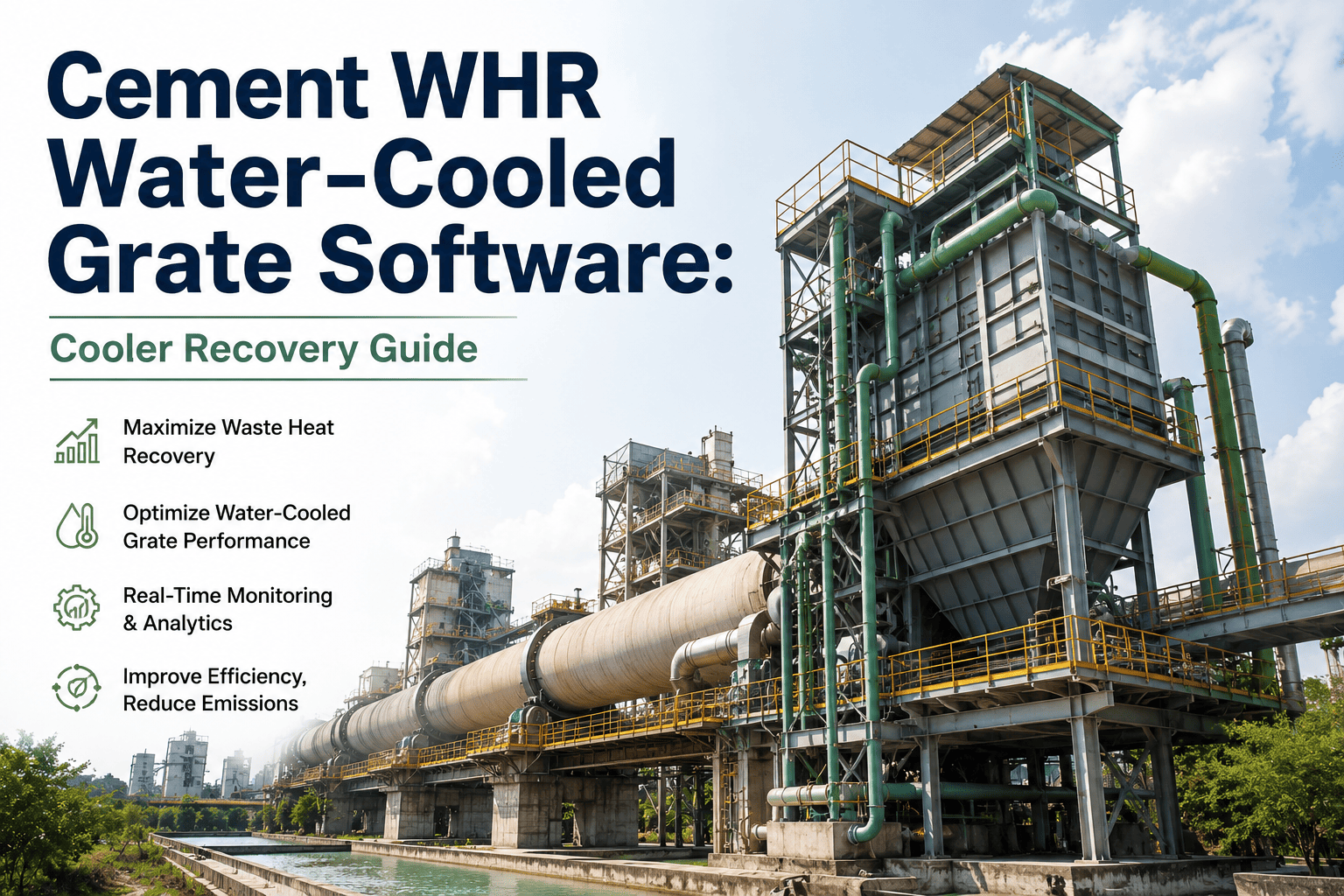
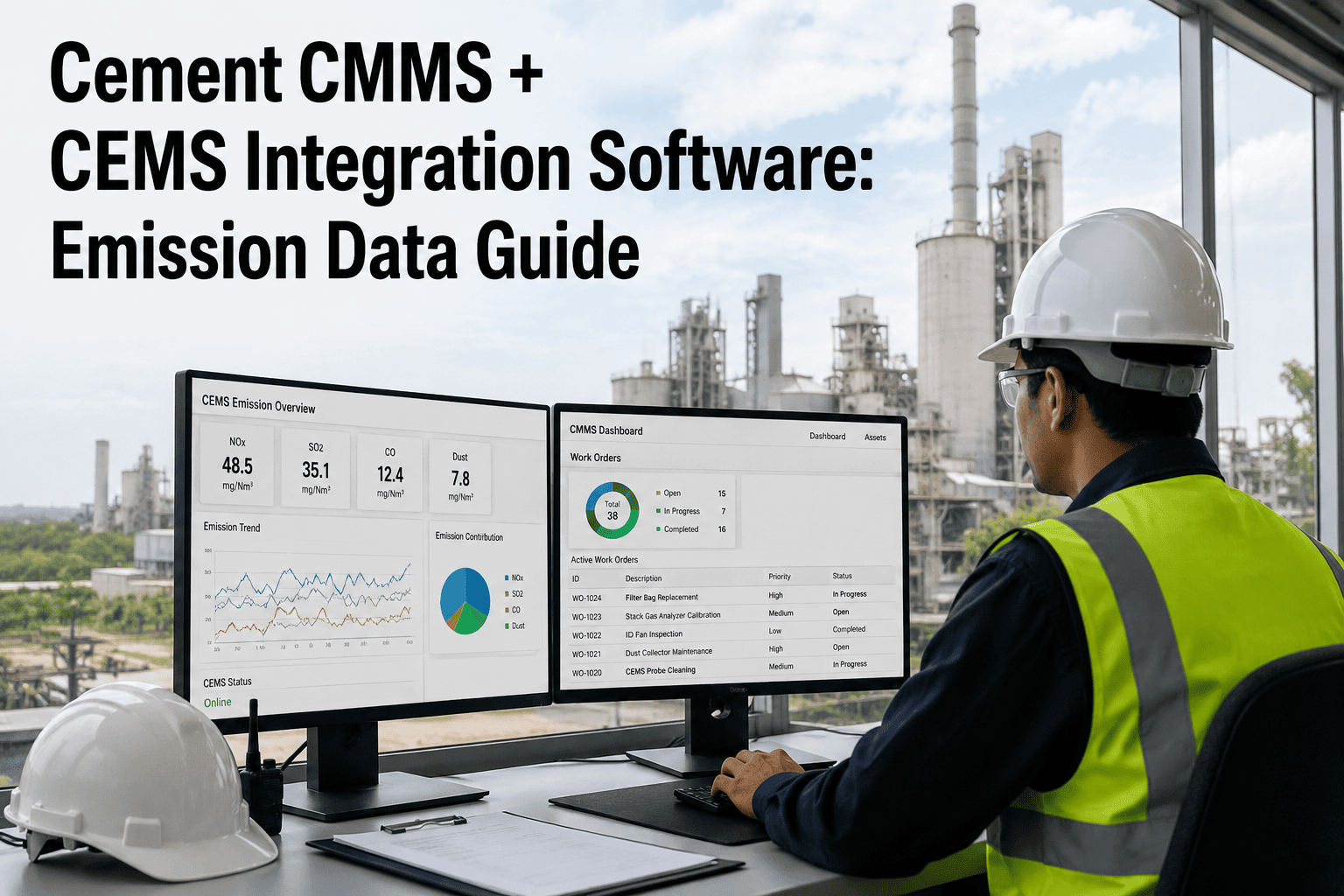
Waste heat recovery is the single biggest lever a cement plant has for cutting grid power costs, yet on most sites the PH boiler, AQC boiler, bypass dampers, and steam turbine sit outside the maintenance system entirely. Boiler tube leaks go undetected until a forced outage drops generation to zero, soot blower schedules slip because no one owns them, and clinker exit temperature drifts for an entire shift before anyone notices the AQC boiler is starved of hot air. The result is a WHR asset base engineered to deliver 25 to 45 kWh per tonne of clinker that actually runs at a fraction of that number because its maintenance is reactive instead of planned. OxMaint's WHR integration module folds every one of these assets into your CMMS, so PH and AQC boiler health, bypass damper cycling, and turbine performance sit next to your kiln and mill work orders instead of a separate spreadsheet. See how a WHR-integrated CMMS keeps generation online by booking a live demo of the platform.
WHR Integration Guide — Cement Cooler Heat Recovery
Bring Your PH Boiler, AQC Boiler and Turbine Into One CMMS
Cement WHR software that turns boiler pressure, clinker exit temperature, bypass damper cycles and turbine output into work orders — before generation drops, not after.
45 kWh/t
Clinker generation potential a healthy WHR system can hit
20-40%
Of plant power that WHR can supply when uptime is protected
72 hr
Typical early-warning lead time on boiler fouling trends
100%
Digital PM history across PH boiler, AQC boiler and turbine
Why WHR Assets Fall Through the Maintenance Gap
Most cement plants treat waste heat recovery as a power plant bolted onto the kiln line, watched by an operations team on a separate control screen. The PH boiler tracks kiln exhaust, the AQC boiler tracks clinker cooler air, and the steam turbine sits in its own control room — but none of that data reaches the CMMS where kiln, mill and cooler work orders already live. That gap is expensive. A single unnoticed soot blower failure can quietly cut AQC boiler heat transfer efficiency over a few weeks, eroding generation long before it is ever logged as a maintenance issue, and by the time a steam drum alarm fires, the plant has already been buying more grid power than it needed to.
Where WHR Generation Gets Lost
01
Boiler Tube Leak Blind Spots
PH and AQC boiler tube leaks are usually caught by a falling steam drum level or a sudden pressure drop, after generation has already been lost for hours. Without pressure and level trending tied to a work order, the leak gets patched but the pattern behind it repeats.
02
Soot Blower Neglect
Dust fouling on PH and AQC heating surfaces reduces heat transfer shift by shift. When soot blower cycles live on a paper checklist instead of a tracked schedule, cleaning gets skipped during busy weeks and generation drifts down unnoticed.
03
Bypass Damper Guesswork
Bypass dampers protect kiln production by diverting exhaust away from the boilers during startup or upset conditions. If every bypass event isn't logged with cause and duration, plants can't tell how much generation was sacrificed to protect the kiln.
04
No Turbine-to-Work-Order Link
A dip in generator output could mean condenser vacuum loss, a fouled boiler, or a damper stuck partially open. Without linking turbine data to upstream maintenance history, root cause investigation starts from zero every single time.
What OxMaint Tracks Across Your WHR System
OxMaint's WHR integration module organizes your waste heat system the way it actually operates — as four connected asset groups feeding one generation outcome. Each group gets its own real-time trend view, alarm bands and a rolled-up health score, so a shift engineer can see at a glance whether the PH boiler, the AQC boiler, the bypass and dust control system, or the turbine-generator set is holding back today's power output.
PH Boiler
Kiln exhaust inlet temperature trend (approx. 350°C)
Steam drum pressure and level
Tube leak alarm history
Soot blower cycle log and fouling curve
AQC Boiler
Cooler mid-tap hot air temperature (approx. 300°C)
Clinker exit temperature correlation
Economizer inlet vs outlet delta
Dust and particulate loading trend
Bypass and Dust Control
Bypass damper cycle count and duration
Kiln upset correlation log
Self-cleaning cycle status
Gas duct differential pressure
Turbine-Generator
Steam turbine inlet pressure and temperature
Generator output vs rated potential
Grid synchronization event log
Condenser vacuum trend
See Your Whole WHR System in One Screen
OxMaint connects PH boiler, AQC boiler, bypass dampers and turbine-generator data into a single CMMS view, so a generation dip gets a work order instead of a shrug.
How the WHR Generation Health Score Works
Waste heat recovery output depends on a chain of assets that all have to be healthy at once — a clean AQC boiler feeding a well-tuned turbine through dampers that only bypass when the kiln genuinely needs it. OxMaint's AI engine scores that chain as a whole, then breaks the score down by asset, so engineers know exactly where to step in rather than chasing symptoms across three different control screens.
1
DCS and SCADA Data Ingestion
PH boiler pressure, AQC exit temperature, bypass damper position and turbine output stream into OxMaint via MQTT or OPC-UA directly from your existing DCS, without replacing plant instrumentation.
Data Layer
2
Boiler and Turbine Baselining
The model baselines each boiler and the turbine-generator set against its own historical performance, so a mid-tapping AQC line is never compared against a different plant's PH boiler curve.
AI Layer
3
Generation Health Scoring
A composite 0-100 score updates hourly per asset group, weighted so a tube leak alarm on the PH boiler pulls the score down faster than a routine soot blower cycle.
Scoring Layer
4
Auto Work Order With Root Cause Context
When the score drops, OxMaint opens a work order pre-populated with the sensor trend, the affected asset and any recent bypass events, so the technician starts with context instead of a blank ticket.
Action Layer
OxMaint vs Traditional WHR Monitoring
Frequently Asked Questions
What WHR assets does OxMaint's CMMS module cover?
OxMaint tracks the PH boiler, the AQC boiler, bypass and dust control dampers, and the steam turbine-generator set as one connected system, alongside your kiln, mill and cooler assets. Tell us about your setup when you
book a demo.
How does OxMaint log bypass damper events?
Every bypass cycle is captured with its start time, duration and the kiln condition that triggered it, so you can see how much generation was diverted to protect production and whether the damper needs service.
Can OxMaint integrate with our existing DCS or SCADA system?
Yes. PH boiler, AQC boiler and turbine data can be ingested via MQTT, OPC-UA or API directly from your plant's control system, with no need to replace existing instrumentation.
How is the health score different from a fixed steam pressure alarm?
Fixed alarms fire on absolute thresholds and miss the slow fouling that erodes generation over weeks. OxMaint's score baselines each boiler and the turbine against its own history to catch that drift early.
How long does the WHR module take to implement?
Most cement plants are live within 2 to 4 weeks, with OxMaint's team handling asset configuration and DCS integration.
Start a free trial to explore the dashboard first.
Stop Losing Generation to Maintenance Blind Spots
OxMaint brings PH boiler, AQC boiler, bypass dampers and turbine-generator data into one CMMS, so every megawatt your WHR system was built to deliver actually reaches the grid.