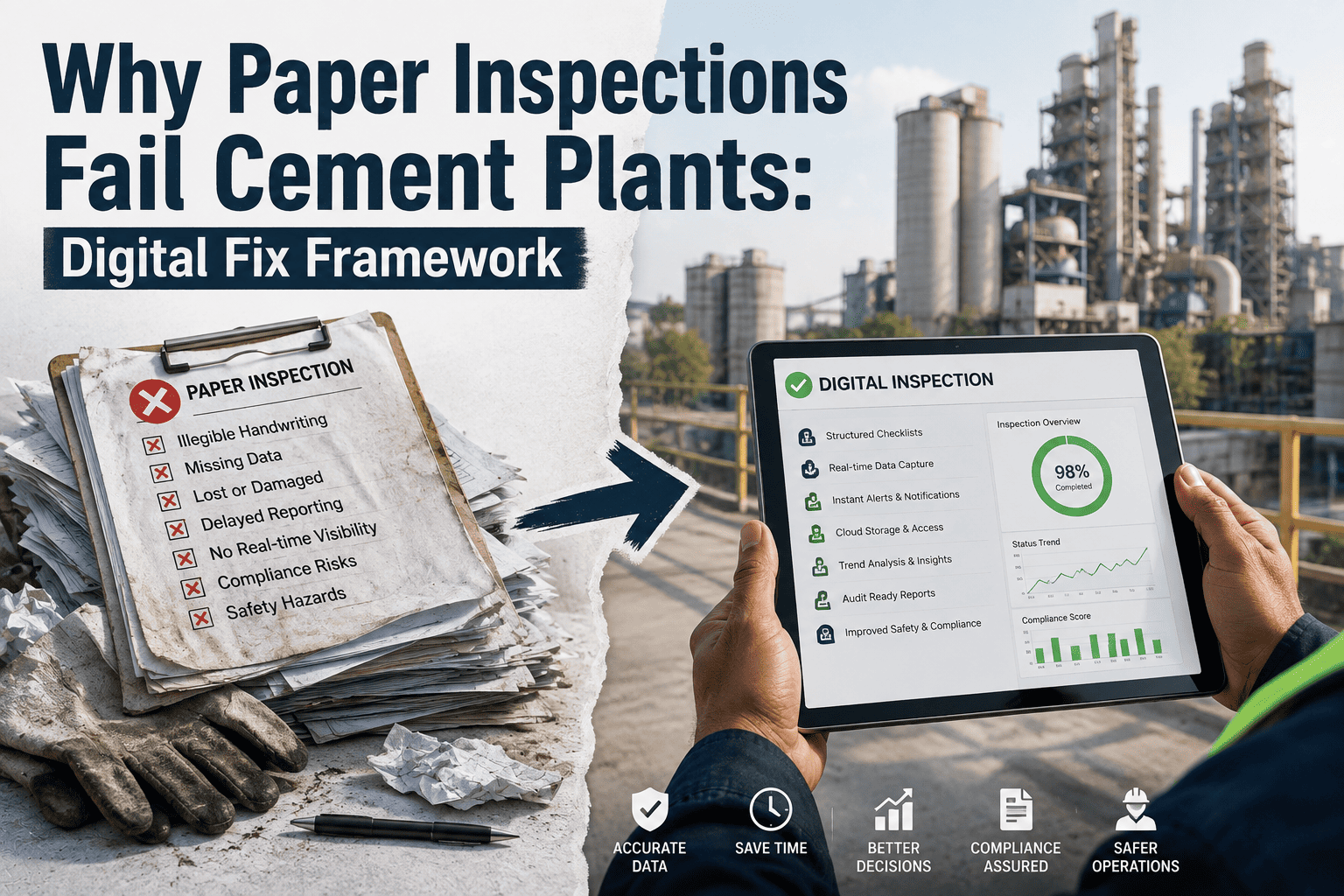
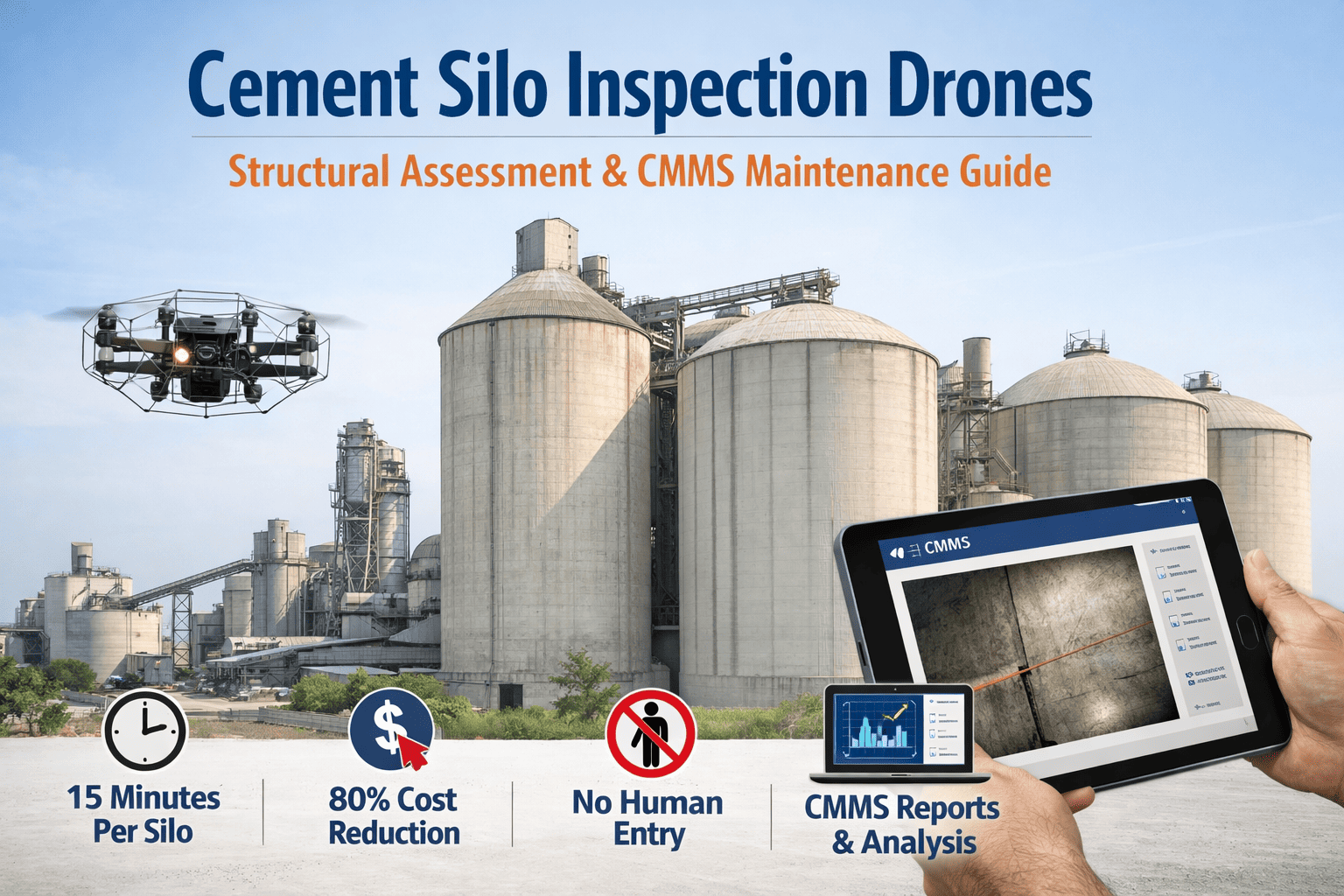
A static inspection route built three years ago still sends operators to check a compressor that was decommissioned last year — while a new bucket elevator with three documented bearing failures in six months gets the same inspection interval as every other conveyor. Static routes waste time on low-risk equipment and under-inspect the assets that are actually failing. Cement plants that apply risk-based logic to inspection routing cut route time by 25–40% while dramatically increasing detection of real abnormalities. OxMaint's inspection routing engine uses asset failure history, recurring fault data, and AI-prioritized equipment risk scores to automatically generate inspection routes that focus attention where failures are actually happening — and reduce unnecessary checks on stable, low-risk equipment. Book a demo to see autonomous inspection route generation running in OxMaint for your cement plant.
AI Predictive Maintenance · Inspection Management · OxMaint
Autonomous Inspection Routes for Cement Plants
Stop sending operators to every asset on fixed schedules. Build risk-based routes from actual failure history, recurring fault data, and AI-prioritized equipment risk — updated automatically as conditions change.
Risk-Based Route Prioritization
Intervals auto-adjust based on live failure history and AI risk score updates
The Problem with Static Routes
Why Fixed Inspection Schedules Fail in Cement Plants
Time Wasted on Stable Equipment
Fixed routes apply identical inspection frequency to all assets regardless of risk. A kiln drive running perfectly for 18 months gets the same attention as a bucket elevator with 4 bearing failures in 6 months — misallocating skilled operator time.
High-Risk Assets Under-Inspected
When new equipment is added, recent major repairs change failure risk, or seasonal conditions shift equipment stress — static routes don't adapt. New high-risk assets inherit the low-frequency schedule of the old equipment they replaced.
Failure History Not Used
Paper round sheets and disconnected CMMS data mean recurring failure patterns at specific equipment are invisible to route designers. Routes built without failure data ignore the strongest signal available for predicting where the next failure will occur.
Routes Never Updated
In most plants, inspection routes are reviewed annually at best. Between reviews, plant conditions change — equipment added, modified, or retired — but routes remain unchanged. Operators inspect decommissioned equipment and miss critical new assets.
Build Inspection Routes That Reflect Real Equipment Risk — Not Last Year's Schedule
OxMaint uses your asset data, failure history, and AI risk scores to generate routes that put operator attention where failures are actually happening.
How OxMaint Does It
Three Data Sources That Power Autonomous Route Generation
OxMaint analyzes every work order closed against each asset — failure type, failure mode, time between failures, and severity. Assets with MTBF below the plant average for their category receive higher inspection priority. Assets with zero failures in 24 months at normal operating conditions receive reduced inspection frequency automatically.
Example: VRM roller bearing with 3 failures in 14 months → inspection interval reduced from 4 hours to 2 hours and hydraulic pressure check added to route.
OxMaint identifies recurring fault codes at specific equipment — faults repeating more than twice per month flagged as systemic. Assets with active recurring fault patterns added to enhanced inspection routes regardless of their base risk category. Recurring fault checks added as targeted inspection steps at the specific component level.
Example: Kiln inlet seal recurring air in-leakage 4 times in 45 days → dedicated seal condition check added to every kiln round until root cause is resolved.
OxMaint's AI model scores each asset's current risk level using operating hours since last maintenance, failure history, current anomaly signals from round readings, and asset criticality to production. Risk scores updated after each inspection round — assets with rising anomaly readings escalate automatically without waiting for the next scheduled review.
Example: Kiln support roller temperature trending +1.5°C per day over 6 readings → risk score escalates from Medium to Critical, inspection interval reduces to every 2 hours with bearing temperature trending alert.
Results
What Cement Plants Achieve with Risk-Based Inspection Routes
30%
Reduction in Total Route Time
Removing unnecessary checks from low-risk stable equipment frees operator hours for higher-value activities without reducing safety or detection capability.
2.4x
More Abnormalities Detected
Concentrating inspection effort on high-risk equipment significantly increases early abnormality detection rates — catching failures before they become unplanned shutdowns.
45%
Drop in Repeat Failures
Adding targeted recurring fault checks to routes for assets with active repeat failures breaks the cycle of reactive repair — root causes addressed before the next failure occurs.
FAQ
Autonomous Inspection Routes — Common Questions
How much failure history data does OxMaint need to start generating risk-based routes?
Can inspection planners manually override the AI-generated route suggestions?
Yes — OxMaint presents AI-generated route suggestions as recommendations. Inspection planners review and approve route changes, can override intervals based on operational knowledge, and can add or remove inspection points manually. The AI assists rather than replaces the planner's judgment.
Book a demo to see route planning workflows in OxMaint.
How does OxMaint handle seasonal or campaign-based changes to equipment risk in cement plants?
OxMaint's route engine considers operating hours and recent failure patterns rather than calendar dates, so seasonal production intensity changes are reflected automatically. Plants can also manually escalate route frequency for specific equipment during high-demand campaigns or immediately following major repairs.
Sign in to configure campaign-based route adjustments in OxMaint.
Does OxMaint show which assets were removed from a route and why?
Yes — OxMaint maintains a full route change log showing every asset added, removed, or rescheduled with the data reason — low failure history, AI risk score drop, or manual planner override. This creates an auditable record for maintenance management review and HSSE compliance.
Book a demo to see route change audit logs in OxMaint.
Can the same risk-based routing logic be applied across multiple cement plants in a group?
Yes — OxMaint supports multi-site deployment with asset and route data managed independently per plant while corporate engineering can access cross-site failure pattern reports. Group-level insights identify common high-risk equipment categories across plants for standardized inspection improvements.
Sign in to deploy risk-based routes across multiple sites in OxMaint.
Stop Guessing Which Assets Need More Inspection — Let the Data Decide
Asset failure history · Recurring fault detection · AI risk scoring · Automatic route updates · Complete audit trail. Routes that improve with every inspection completed.