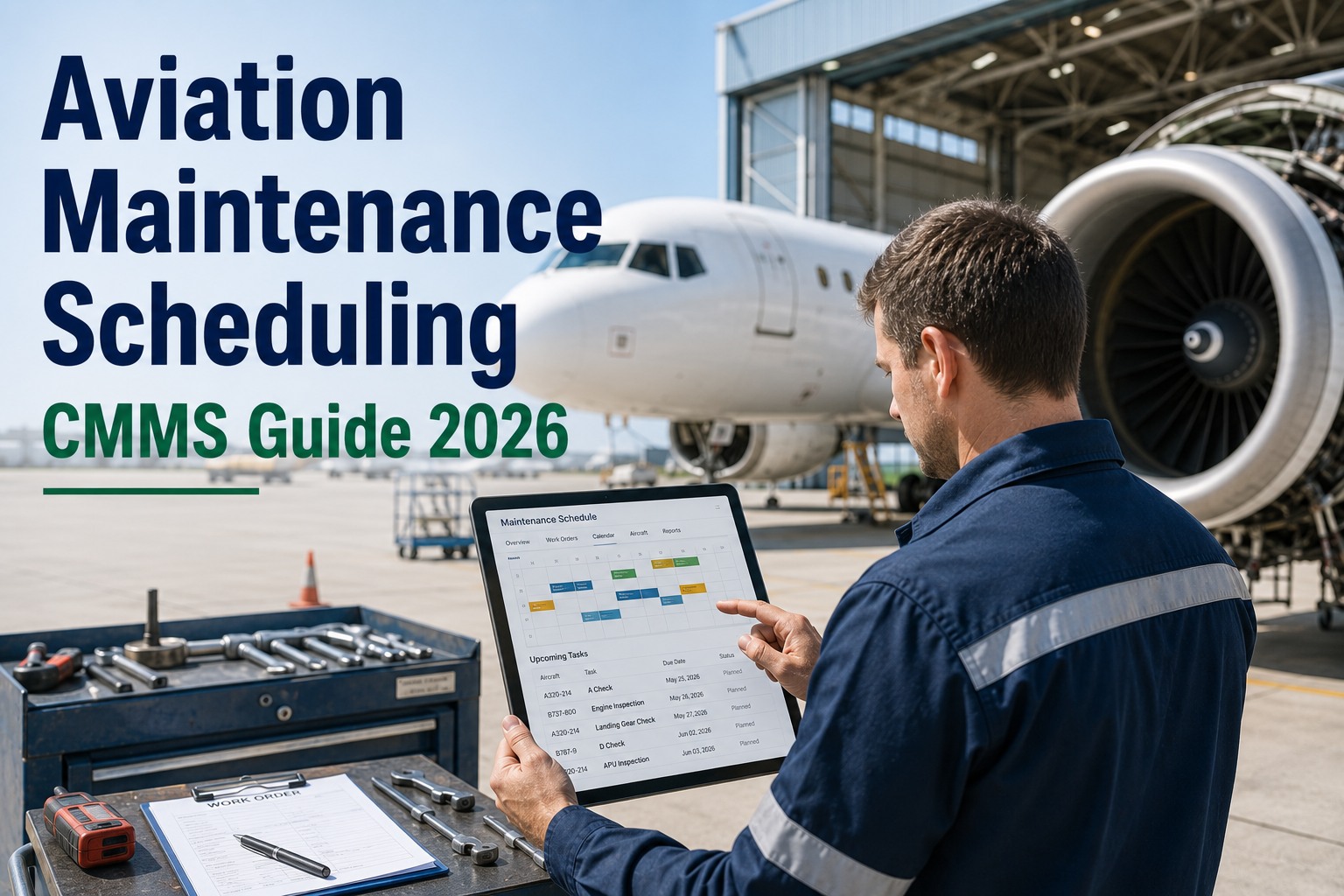
Aviation predictive maintenance has moved from PowerPoint slides to production floors in 2026, with engine trend monitoring, aircraft health management, and airport IoT now delivering measurable, repeatable savings. This guide covers how airlines, MROs, and airports are using predictive diagnostics CMMS to fuse multi-sensor data, detect machine learning failure signatures, and trigger automated work orders — achieving payback within 12 to 18 months. If your maintenance and reliability team is still relying on reactive scheduling or isolated Excel logs, the cost of an AOG (Aircraft on Ground) event will only climb. See how OxMaint connects ACMS and FOQA data into actionable alerts when you Start Free Trial today.
Is Your Maintenance Program Grounding Profitability?
Unplanned AOG events cost airlines up to $150,000 per hour. Modern aviation predictive maintenance shifts teams from reactive firefighting to AI-driven failure detection — cutting unscheduled ground time by 25% and recovering millions in annual revenue.
How Aviation Predictive Maintenance Pays Back in 12–18 Months
A predictive diagnostics CMMS pays for itself not by adding more sensors, but by converting existing ACMS and FOQA data into automated, prioritized work orders. The formula is straightforward: reduce unscheduled downtime, defer unnecessary preventative maintenance, and eliminate AOG logistics premiums.
Consider a regional airline operating 45 aircraft that previously spent $4.2M annually on unplanned line maintenance and AOG logistics premiums. By implementing an aviation predictive maintenance program tied directly to their CMMS, they identified high-risk engine and landing gear anomalies 8–14 days before failure. In year one, they avoided 120 ground hours, deferred 400 hours of routine PM, and saved $610K in expedited shipping — yielding a net ROI of $1.8M and a 9-month payback period.
Deploying a Predictive Diagnostics CMMS in Aviation
Moving from legacy preventative maintenance to a predictive CMMS aviation program requires a structured rollout. Most maintenance and reliability teams achieve operational integration within 90 days when following a phased timeline.
Data Foundation & Asset Tagging
Map all critical assets (engines, APUs, hydraulics, landing gear) into the CMMS. Ingest historical ACMS and FOQA data to establish baseline failure signatures.
Sensor Fusion & ML Thresholds
Connect multi-sensor streams (vibration, EGT, oil pressure) into the predictive engine. Define alert thresholds using machine learning failure detection models tuned to your fleet.
Automated Work Order Routing
Activate alert workflows. When the diagnostic CMMS predicts a failure, it auto-generates a work order, allocates spare parts, and notifies the MRO crew — eliminating manual dispatch delays.
See Predictive Maintenance Live on Your Fleet
Stop reacting to AOG events. Discover how OxMaint connects multi-sensor data to automated work orders in a 30-minute personalized demo.
How OxMaint Powers Aviation Predictive Programs
OxMaint is an AI-powered CMMS and EAM platform built to unify predictive diagnostics with daily maintenance execution. Instead of siloed health monitoring dashboards, OxMaint closes the loop from anomaly detection to parts allocation and audit-ready compliance reporting.
Multi-Sensor Data Fusion
Aggregate ACMS, FOQA, and airport IoT streams into a single predictive engine. OxMaint identifies composite failure signatures, helping you cut unplanned downtime by 30–50%.
Automated Alert Workflows
Eliminate paper work orders. When the AI predicts a threshold breach, OxMaint instantly generates a prioritized work order and reserves the necessary spare parts.
Spare-Parts Inventory AI
Align parts availability with predictive failure dates. OxMaint optimizes stock levels, reducing expedited shipping costs by up to 40% and preventing AOG delays.
FAA & EASA Audit Readiness
Every predicted alert, work order, and part replacement is logged with cryptographic timestamps. Ensure continuous compliance with FAA Part 145 and EASA regulations.
Aviation Predictive Maintenance Metrics & KPIs
To justify a CMMS predictive 2026 investment, maintenance and reliability teams must track specific KPIs. Use this benchmark table to compare your current operations against industry-leading predictive programs.
| Maintenance KPI | Reactive / Legacy Baseline | Predictive CMMS Benchmark | Impact |
|---|---|---|---|
| Mean Time Between Failures (MTBF) | 350 flight hours | 520 flight hours | +48% reliability |
| Aircraft on Ground (AOG) Events | 4.2 per month | 1.1 per month | -73% downtime |
| Spare Parts Inventory Carry Cost | $2.1M annually | $1.5M annually | -28% capital tie-up |
| Non-Routine MRO Labor Hours | 1,800 hours/month | 1,150 hours/month | -36% labor waste |
Aviation Predictive Diagnostics & CMMS FAQs
What is aviation predictive maintenance?
Aviation predictive maintenance uses multi-sensor fusion, engine trend monitoring, and machine learning to detect equipment failures before they happen. By integrating ACMS and FOQA data into a CMMS, airlines can automatically generate work orders and order spare parts days or weeks before a failure causes an AOG event.
How does a predictive diagnostics CMMS integrate with existing aircraft data?
A predictive diagnostics CMMS integrates by ingesting existing data streams from the Aircraft Condition Monitoring System (ACMS) and Flight Operational Quality Assurance (FOQA) programs. Platforms like OxMaint map this data to specific asset tail numbers, applying ML models to establish baselines and trigger alerts when anomalies are detected.
What is the typical ROI and payback period for predictive maintenance in aviation?
Most airlines, MROs, and airports see a payback period of 12 to 18 months when implementing a CMMS predictive program. By reducing AOG hours, deferring unnecessary preventative maintenance, and optimizing spare parts logistics, teams typically achieve a 25% reduction in unscheduled downtime. You can calculate your exact savings when you Start Free Trial.
How long does it take to deploy a predictive CMMS for an airline?
Deployment typically takes 60 to 90 days. The first month focuses on asset tagging and historical data ingestion, the second on sensor fusion and threshold tuning, and the third on automating work order routing and alert workflows. Switching from spreadsheets or legacy systems is streamlined through automated data migration tools.
Is predictive maintenance compliant with FAA and EASA regulations?
Yes, a properly configured predictive diagnostics CMMS enhances compliance with FAA Part 145 and EASA regulations. The system creates immutable, timestamped audit trails for every predicted alert, generated work order, and executed repair, ensuring maintenance and reliability teams are always inspection-ready.
Ready to Ground AOG Events for Good?
Join the airlines and MROs using OxMaint to predict failures, automate work orders, and save millions in recovered ground time.
Free 14-day trial · No credit card required