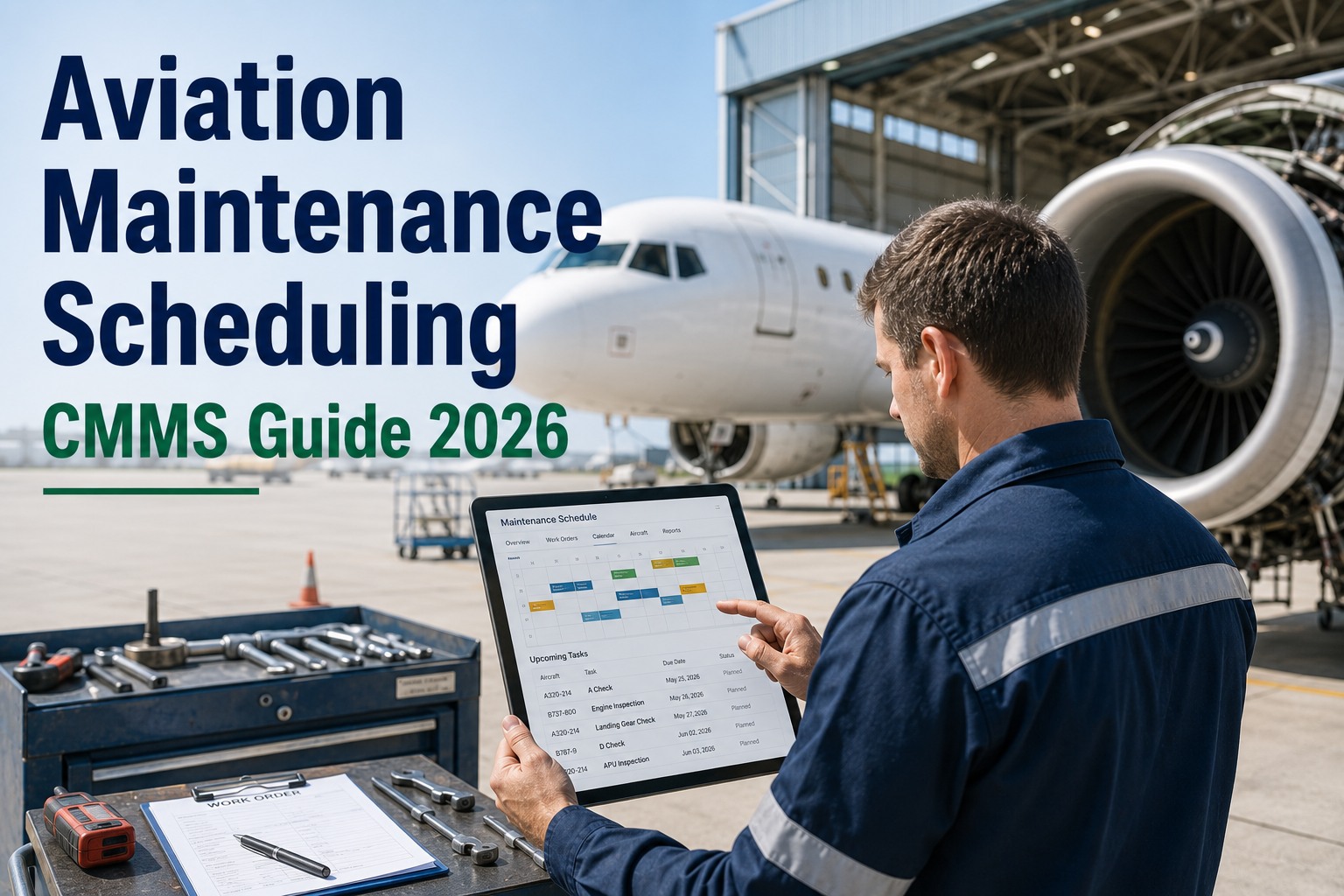
Airport seasonal maintenance scheduling is the backbone of safe, on-time operations — and a CMMS built for aviation is what keeps winter deicing, summer HVAC peak demand, and spring pavement programs on track without missing capacity. A typical mid-sized airport manages 5,000+ assets across runways, terminals, and airfields, and missing a seasonal readiness window can mean flight cancellations, FAA noncompliance, or millions in emergency repair costs. This 2026 guide to airport seasonal maintenance covers winter deicing prep, summer HVAC readiness, and how CMMS-based seasonal work order automation eliminates guesswork. See how OxMaint turns seasonal chaos into a planned, auditable workflow — Start Free Trial to experience it on your assets today.
Airport Seasonal Maintenance 2026
Is your airport ready for the next season — or just reacting to the last one?
Seasonal readiness failures cost airports up to $10K per cancelled flight in emergency response and passenger disruption. CMMS-driven seasonal scheduling eliminates the gap between winter deicing prep and summer HVAC peak demand — keeping every asset inspection, PM trigger, and spare part ready before the season hits.
Seasonal Maintenance Guide 2026
Why airport seasonal maintenance demands CMMS-driven scheduling
Airport maintenance is unlike any other facility operation — it runs on four distinct seasonal cycles, each with hard readiness deadlines tied to FAA compliance, passenger capacity, and weather windows.
Snow Operations & Deicing
October–February. Deploy and certify 200+ pieces of snow removal equipment, calibrate deicing fluid trucks, inspect runway friction sensors, and stage chemical inventories. A single unprepared snow event can halt operations for 6+ hours.
Pavement & Drainage Season
March–May. Runway and taxiway crack sealing, pothole repair, catch basin clearing, and pavement marking refresh. Airfield pavement inspections must align with FAA AC 150/5380-7 standards before summer traffic peaks.
HVAC Peak Load Readiness
June–August. Terminal HVAC chillers, air handling units, and cooling towers must hit 100% capacity before peak passenger volume. A single chiller failure during a 95°F departure bank can ground operations and trigger emergency evacuation.
Lighting & NAVAID Programs
September–November. Runway edge and threshold light replacement, approach lighting system checks, and sign reflectivity audits before reduced daylight. Programs must close before first freeze to avoid trenching in frozen ground.
Month-by-Month Timeline
How to map airport seasonal scheduling across all 12 months
A CMMS seasonal maintenance plan distributes work orders so no single month is overloaded. Here is a defensible 12-month framework built around FAA inspection cycles and weather-driven triggers.
Snow removal equipment runs daily. Deicing fluid inventory replenished weekly. Runway friction testing after each snow event. Post-storm damage assessments logged in CMMS.
Continue snow operations. Begin spring pavement inspection planning. Order crack sealant and marking materials. Review winter season PM completion rates in CMMS dashboard.
Stand down snow equipment. Launch full airfield pavement inspection program — 1,200+ sections at a mid-sized hub. Begin catch basin and drainage clearance. Calibrate spring weather sensors.
Crack sealing, pothole repair, and pavement marking refresh in full swing. All work orders tagged to FAA AC 150/5380-7 compliance. CMMS tracks material usage per section.
Terminal chiller annual PMs, cooling tower descaling, AHU filter replacement, and refrigerant top-off. All HVAC work orders must close before June 1 peak demand window.
HVAC runs at 100% capacity. Daily chiller performance monitoring via CMMS sensors. Baggage system conveyor PMs intensified for peak travel. Passenger boarding bridge inspections weekly.
Mid-season HVAC performance audit. Cooling tower legionella testing. Begin fall lighting program material planning. CMMS generates summer PM completion report for FAA Part 139 compliance.
Order runway edge and threshold light fixtures. Schedule NAVAID inspection windows with FAA. Begin winter equipment retrieval from storage. Pre-order deicing fluid contracts.
800+ airfield lighting fixtures audited and replaced. Approach lighting system checks. Sign reflectivity testing. All trenching and cable work completed before first freeze.
Snow plows, sweepers, and blowers serviced and staged. Deicing truck calibrations complete. Chemical inventory at 100% of projected seasonal demand. Runway friction sensors tested.
All winter PMs must be 100% complete by November 15. Final FAA Part 139 winter readiness self-inspection. CMMS generates seasonal readiness compliance packet.
Full snow operations. 24/7 weather monitoring. Deicing fluid usage tracked per gate in CMMS. Post-event after-action reviews logged for continuous improvement.
CMMS Winter Prep
Winter deicing equipment preparation checklist for airports
Winter readiness at an airport is not a suggestion — it is a regulatory obligation under FAA Part 139. Use this CMMS-driven checklist to ensure no asset is overlooked.
- Service all snow plows, sweepers, and rotary brooms — engine, hydraulics, cutting edges
- Calibrate deicing fluid application trucks to manufacturer specs
- Inspect and test runway friction testers — certify before first snow event
- Verify snow removal equipment GPS tracking and dispatch integration
- Stock deicing fluid to 120% of projected seasonal demand
- Verify sand and chemical storage capacity — potassium acetate, sodium formate
- Set CMMS minimum-stock alerts for all winter consumables
- Confirm supplier lead times and emergency replenishment contracts
- Test runway embedded temperature and friction sensors
- Inspect glycol recovery systems and detention basins
- Verify weather station data feeds into CMMS for automated triggers
- Inspect heated ramp and gate area drainage systems
A 24-gate regional airport tracked 180 winter-readiness assets in spreadsheets. During a November 2024 ice event, 3 of 8 deicing trucks were found uncalibrated and glycol stock was at 40% of projected demand — resulting in 14 cancelled departures and $140K in emergency logistics costs. After implementing OxMaint CMMS seasonal templates, the same airport hit 100% winter readiness by October 28 and reduced seasonal prep labor by 220 hours.
CMMS Summer Readiness
Summer HVAC airport peak demand readiness strategy
Terminal HVAC is the single largest energy consumer and the most critical comfort system during summer peak. A chiller failure during a 95°F departure bank can trigger terminal evacuation and halt boarding for hours.
A 500,000 sq ft terminal with 3,000 peak passengers requires approximately 27.5 million BTU/hr of cooling capacity — all chillers must be certified to deliver 110% of this figure before June 1.
One mid-summer chiller failure at a hub averages $350K–$850K in direct and indirect costs. Preventive seasonal PM costs approximately $12K–$18K per chiller — a 20:1 risk-to-prevention ratio.
| Summer HVAC Asset | PM Frequency | CMMS Trigger | Readiness Deadline |
|---|---|---|---|
| Centrifugal Chiller | Annual + monthly runtime | Runtime hours + oil temp sensor | May 15 |
| Cooling Tower | Quarterly + biweekly summer | Calendar + water quality sensor | May 1 |
| Air Handling Unit | Quarterly | Calendar + pressure drop sensor | May 20 |
| Baggage HVAC System | Semi-annual | Calendar + belt tension check | May 25 |
| Boarding Bridge HVAC | Annual + on-failure | Calendar + complaint threshold | May 30 |
How OxMaint Helps
How OxMaint CMMS powers airport seasonal maintenance scheduling
OxMaint is an AI-powered CMMS and EAM platform built to turn seasonal chaos into a planned, compliant, and auditable workflow. Here is how it maps directly to airport seasonal readiness.
Seasonal PM Templates
Create winter, spring, summer, and fall PM templates that auto-generate hundreds of work orders with one click. Each template carries FAA compliance tags, required parts lists, and technician assignments.
Weather-Driven Triggers
Integrate real-time weather feeds and runway sensor data to automatically trigger snow removal dispatch, deicing fluid orders, and HVAC load-shedding protocols — no manual monitoring required.
Seasonal Inventory Surge Planning
Forecast deicing fluid, sand, pavement sealant, and lighting fixture demand based on historical usage and projected season severity. Auto-generate purchase orders when stock hits seasonal minimum thresholds.
FAA Compliance Audit Trail
Every seasonal work order, inspection, and part replacement is automatically logged with timestamps, technician signatures, and photo evidence. Generate a Part 139 readiness packet in minutes, not weeks.
CMMS vs. Spreadsheets
CMMS seasonal scheduling vs. spreadsheet-based airport maintenance
Most airports still run seasonal readiness in Excel. Here is what that costs — and what switching to a CMMS delivers.
| Capability | Spreadsheet Scheduling | OxMaint CMMS |
|---|---|---|
| Seasonal PM Generation | Manual entry, 40+ hours per season | One-click template deployment, 5 minutes |
| Weather-Driven Triggers | Manual weather monitoring, delayed response | Automated sensor + weather feed integration |
| Inventory Surge Planning | Static reorder points, frequent stockouts | AI demand forecasting based on 3-year history |
| FAA Compliance Documentation | 2–3 weeks of manual packet assembly | Auto-generated audit trail, ready in minutes |
| Multi-Season Visibility | Separate tabs, no cross-season tracking | Unified dashboard across all 4 seasonal cycles |
| Technician Mobile Access | Printed work orders, no real-time updates | Mobile app with offline sync and photo evidence |
See OxMaint on your airport assets — book a 30-minute demo
Walk through a live seasonal PM template, weather-triggered work orders, and FAA compliance reporting tailored to your airport's size and operational profile.
Frequently Asked Questions
Airport seasonal maintenance scheduling FAQs
What is airport seasonal maintenance scheduling in a CMMS?
Airport seasonal maintenance scheduling in a CMMS is the practice of using preventive maintenance templates, weather-driven triggers, and automated work order generation to prepare airport assets for winter snow operations, summer HVAC peak demand, spring pavement programs, and fall lighting audits — all within a single compliant platform. OxMaint CMMS turns this into a one-click seasonal deployment with full FAA audit trails.
When should airports start winter deicing equipment preparation?
Airports should begin winter deicing equipment preparation by October 1, with all snow removal equipment serviced, deicing trucks calibrated, and chemical inventory at 100% of projected demand by November 15. A CMMS like OxMaint automates this timeline with seasonal PM templates that generate work orders 6 weeks ahead of the readiness deadline. Book a Demo to see the winter readiness template in action.
How does a CMMS handle summer HVAC peak demand at airports?
A CMMS handles summer HVAC peak demand by scheduling chiller, cooling tower, and air handling unit PMs before June 1, monitoring runtime hours and sensor data for predictive alerts, and automatically triggering load-shedding protocols when capacity thresholds are reached. OxMaint integrates real-time sensor feeds so maintenance teams catch performance degradation before it becomes a terminal-wide failure.
How much does airport seasonal maintenance software cost?
Airport seasonal maintenance software typically costs $35–$75 per user per month for a full CMMS with seasonal PM templates, inventory management, and compliance reporting. The ROI is significant — airports using OxMaint report 220+ hours of seasonal planning labor eliminated per cycle and zero inventory stockouts during peak operations. Start Free Trial to evaluate it on your assets at no cost.
Can OxMaint CMMS integrate with existing airport weather and sensor systems?
Yes, OxMaint CMMS integrates with airport weather feeds, runway friction sensors, pavement temperature monitors, and HVAC building management systems via API. This enables automated work order triggers — for example, dispatching snow removal crews when runway temperature drops below 34°F or ordering deicing fluid when stock hits a seasonal minimum threshold.
Make next season the first one you are truly ready for
Join airports using OxMaint to deploy seasonal PM templates in minutes, trigger work orders from live weather data, and generate FAA compliance packets automatically. Your next winter or summer peak starts with one decision.
Free 14-day trial · No credit card