Vendor Management Best Practices for Property Managers

Connect with Industry Experts, Share Solutions, and Grow Together!

Join Discussion Forum
vendor-management-property-management-best-practices

A regional manager pulls a routine report and finds one vendor has been working across eleven properties for two months — on an insurance policy that lapsed in week one. No document was ever missing. Enforcement simply stopped after approval. That's the quiet failure mode of vendor management: the risk doesn't show up at onboarding, it re-enters during active work, and it aggregates silently across the whole portfolio until something goes wrong. Get vendor management right and maintenance runs reliably at scale; get it wrong and you drown in coordination overhead, uninsured liability, and cost drift. This guide covers vendor management best practices for property managers — tiering, onboarding, SLAs, performance tracking, and the system that turns a chaotic vendor list into a managed operation. Start free or book a demo.

Property Management · Multifamily & Portfolio Ops · Vendor Management · 2026

Vendor Management: Turn a Chaotic Contractor List Into a Managed Operation

The difference between vendors that make maintenance reliable and vendors that make it chaos isn't luck — it's lifecycle control. Tier them, onboard them under a standard, hold them to SLAs, and track their performance. Here's the playbook, and the system that runs it at portfolio scale.

70→91%
SLA compliance within 90 days of automated vendor tracking

15–24%
cost reduction from vendor consolidation within 12 months of systematic tracking

Compliance Doesn't Fail at Onboarding — It Fails During the Work

Most vendor programs treat compliance as a one-time gate: collect the certificate of insurance at onboarding, file it, move on. But policies lapse, licenses get suspended, and a COI in a filing cabinet doesn't prove a vendor is covered today. When an uninsured contractor floods a unit, the owner's insurer asks one question — did you verify the vendor's credentials before they stepped on the property? "I have a COI from two years ago" is not an answer. Vendor management is lifecycle control, not document verification. Sign up free — no credit card and enforce compliance across the whole vendor lifecycle, not just at the front door.

The Vendor Lifecycle — Control at Every Stage
1
Tier
Rank vendors by criticality & spend
2
Onboard
Verify COI, license, credentials up front
3
Dispatch
Assign work under SLA, block on lapse
4
Track
Score performance on every job
5
Renegotiate
Use the data to consolidate & save

Step 1: Tier Your Vendors

Not every vendor deserves the same attention. Tiering by how critical and how costly a vendor is tells you where to invest in relationships, where to hold the tightest SLAs, and where consolidation will pay off. Schedule a 30-minute demo to map your vendor base into tiers.

Tier 1 · Strategic
High-spend, high-criticality trades — HVAC, plumbing, roofing. Deep relationships, tight SLAs, quarterly business reviews, and the first candidates for volume consolidation.
Tier 2 · Preferred
Regular, reliable vendors for recurring work — electrical, appliance, general repair. Standard SLAs and scorecards, with a clear path to Tier 1.
Tier 3 · Transactional
Occasional or specialty vendors used as needed. Verify compliance and track basics, but don't over-invest in managing low-frequency relationships.

Step 2: Onboard as a Governance Control Point

Onboarding is your first — and cheapest — line of defense against vendor risk. Verify every credential before the first assignment, not after something goes wrong. For portfolios spanning multiple ownership groups, this matters even more: insurance thresholds and credentialing standards vary by owner, and a gap in one place compounds across every property that vendor touches. Create your free account and make credential verification a required gate before any work is assigned.

Certificate of Insurance
Verify coverage limits, endorsements, and — critically — that your management company is listed as additional insured. A COI that documents the vendor's coverage but not your protection under it isn't enough.
Licenses & Certifications
Trade licenses and certifications centralized and current — verified before the first job, so an unlicensed contractor never causes a fire you're liable for.
Background & Subcontractors
Background checks for any vendor with unit keys, and verification that any subcontractor meets the same insurance and license standard as the primary.
Contract & Liability Terms
Contracts that clearly define liability, indemnification, and performance expectations — weak contracts leave the risk with you when work goes wrong.

The COI Was on File. It Had Lapsed in Week One.

Eleven properties, two months of active work, one uninsured vendor — and not a single missing document to flag it, because enforcement stopped the moment onboarding ended. That's how vendor risk aggregates silently across a portfolio. OxMaint closes the gap with hard-stop dispatch: a vendor is automatically blocked from receiving new work orders the moment their COI or license lapses, with expiry alerts at 30, 60, and 90 days out. Compliance becomes a governance control point, not a task someone remembers to check.

Step 3: Set SLAs and Track Performance

The reason property managers negotiate from weakness is simple: no centralized performance data, so they negotiate on intuition instead of evidence. The moment a contractor knows their SLA compliance, first-time-fix rate, and pricing are tracked and compared, behavior changes — documented vendors complete work 28% faster and return for follow-up 67% less often. Build a scorecard from these metrics and run it into quarterly business reviews. Try OxMaint free and start collecting performance data on the first work order.

SLA Compliance Rate
Share of SLA requirements met — the headline measure of vendor reliability. Systematic tracking lifts it from a ~70% industry average to 91% within 90 days.
First-Time Fix Rate
Jobs resolved on the first visit. Rises from 65–70% to 85%+ when vendors know the work is measured — fewer repeat trips, happier residents.
Invoice Accuracy
Invoices matched against the work order they reference. Climbs from 75% to 95%+ with automatic matching — the end of quiet overbilling.
Cost & Safety Variance
Actual vs. budget and market benchmark, plus incidents and near-misses. One serious safety event can erase years of savings.

Where the CMMS Turns the Playbook Into an Operation

Every step above collapses without a system to enforce it — the COI expires unnoticed, the scorecard never gets built, the duplicate dispatch goes uncaught. A CMMS built for vendor management makes lifecycle control automatic and gives you the data to negotiate from strength. Schedule a live walkthrough to see it on your vendor base.

Hard-Stop Compliance Dispatch
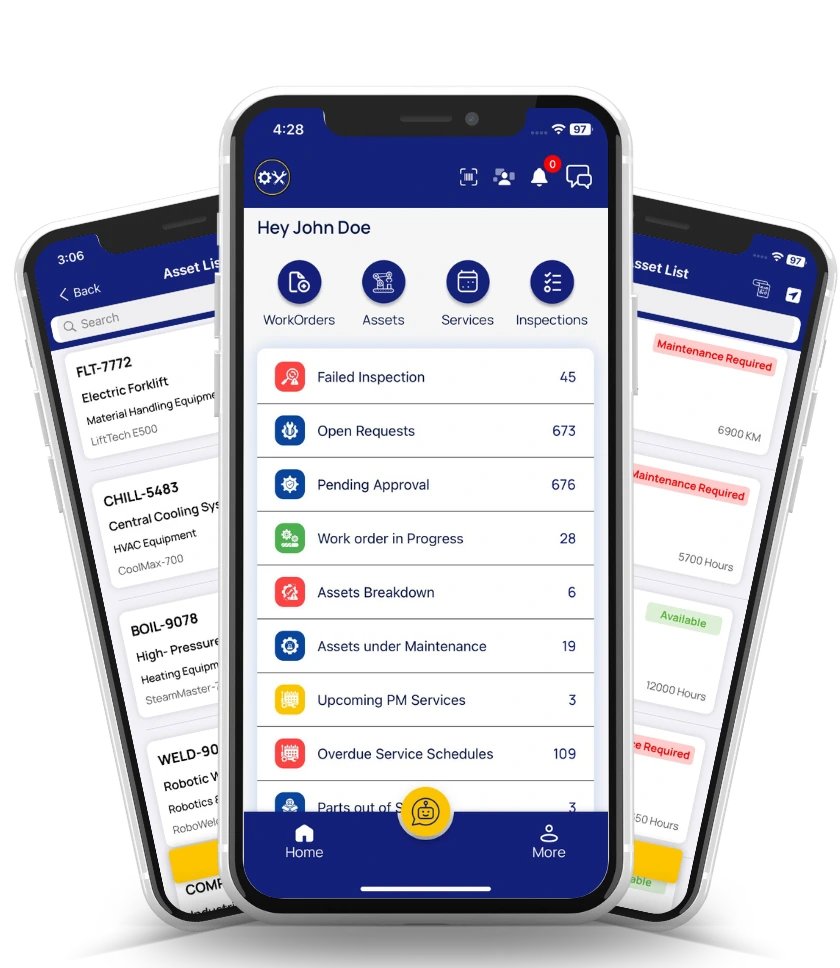
Work-order assignment is automatically blocked for any vendor with a lapsed COI or license, with expiry alerts at 30, 60, and 90 days — no manual checking, no uninsured liability.
Centralized Vendor Database
Contacts, contracts, certifications, and performance in one searchable record per vendor — imported from spreadsheets in minutes.
SLA-Enforced Work Orders
Assign work with SLA targets per vendor, and the system tracks acknowledge, arrival, and resolution against them automatically.
Automatic Performance Scorecards
SLA compliance, first-time-fix, and invoice accuracy compiled per vendor — 12 months of scorecard data that turns a QBR into a negotiation you win.
Duplicate-Dispatch Detection
Catches the double-assignments that cost manually managed portfolios an average $4,800 per incident at a 22% rate — before the invoice ever lands.
Audit-Ready Transaction Log
Every dispatch, arrival, resolution, and document timestamped — proof of compliance ready before an owner or regulator asks.

Tier the vendors, onboard them under one standard, enforce compliance through the work, and let the performance data drive the negotiation — and a scattered contractor list becomes a managed operation that scales with the portfolio instead of drowning it. Sign up free or schedule a demo to build it on your vendor base.

"

I found out we'd been dispatching a landscaper whose insurance lapsed months earlier — pure luck nothing happened. That was the wake-up call. We moved every vendor into OxMaint, and now a lapsed COI blocks dispatch automatically and I get alerts long before anything expires. But the real surprise was the leverage: I walked into renewals with twelve months of scorecards showing SLA compliance and first-time-fix by vendor, and consolidated our trades at meaningfully better rates from the incumbents who used to just re-up without a conversation. Chaos to control, and it paid for itself in the first negotiation.

Director of Operations · Multifamily Property Management Portfolio

Frequently Asked Questions

Why isn't collecting a COI at onboarding enough?
Because compliance fails during the work, not at onboarding. Policies lapse and licenses get suspended after approval — a certificate from two years ago doesn't prove current coverage. Vendor management is lifecycle control, enforced continuously.
What is hard-stop vendor dispatch?
Platform logic that automatically blocks a vendor from receiving new work orders the moment their insurance or trade license lapses. In 2026 it's the emerging compliance standard, replacing manual checks that happen only when someone remembers.
How should I tier my vendors?
By criticality and spend: Tier 1 strategic (high-value trades like HVAC and roofing) get deep relationships and QBRs; Tier 2 preferred handle recurring work; Tier 3 transactional are occasional specialists you verify but don't over-manage.
What vendor metrics matter most?
SLA compliance rate, first-time-fix rate, invoice accuracy, and cost and safety variance. Combine them into a scorecard per vendor and use it to drive quarterly business reviews and renewals.
Why does "additional insured" status matter on a COI?
A COI that lists only the vendor's coverage documents that the vendor is insured — but not that you're protected under their policy. Verifying additional-insured status is what actually extends the vendor's coverage to your management company.
How much can systematic vendor management save?
Vendor consolidation typically delivers 15–24% cost reduction within 12 months, with SLA compliance rising to 91% and invoice accuracy to 95%+ — plus eliminating duplicate dispatches that average $4,800 each. Sign up free to start.

Enforce Compliance, Measure Performance, Negotiate From Strength.

OxMaint blocks dispatch on lapsed credentials, centralizes every vendor record, tracks SLA and first-time-fix automatically, and gives you the scorecard data to consolidate and save. Start free — no credit card. Or book a demo.



By William Jerry

Experience
Oxmaint's
Power

Take a personalized tour with our product expert to see how OXmaint can help you streamline your maintenance operations and minimize downtime.

Book a Tour

Share This Story, Choose Your Platform!

Connect all your field staff and maintenance teams in real time.

Report, track and coordinate repairs. Awesome for asset, equipment & asset repair management.

Schedule a demo or start your free trial right away.

iphone

Get Oxmaint App
Most Affordable Maintenance Management Software

Download Our App