In a steel plant the switchgear is the chokepoint every other asset depends on the arc furnace, the rolling mill, the caster all go dark when a breaker or bus fails. And a steel-mill electrical room is a punishing place to keep gear healthy: conductive dust, vibration, heat, and load cycling that hammers contacts far harder than a typical industrial site. This guide is a practical switchgear maintenance program for the steel-plant engineer — the HV/LV inspection routine, the breaker tests that actually predict failure, thermography on the bus, and how to schedule the work around an outage window that's almost impossible to get. Start free on OxMaint to build your switchgear PM program, or book a demo.
HV / LV · Breaker Testing · Thermography · Outage Scheduling
Steel Plant Electrical Switchgear Maintenance Guide
The chokepoint the whole mill runs through — kept healthy through a punishing environment with a disciplined, outage-aware PM program.
4
Task families — visual/mechanical, breaker testing, thermography, protection
Live
Thermography and PD run energized; the rest waits for the outage window
Dust
Conductive mill dust is the environmental factor that shortens steel-plant gear life
1 WO
Every task logged to a work order against the specific panel and breaker
Why Steel-Plant Switchgear Is a Harder Job
The maintenance intervals printed in a switchgear manual assume a clean, stable industrial environment. A steel mill is the opposite, and the program has to be tightened to match. Four environmental factors accelerate degradation here in ways a generic PM schedule never accounts for — which is why steel-plant switchgear needs its own program, not the manufacturer's default calendar.
Conductive Dust
Iron-oxide and graphite dust settle on insulators and bus, creating tracking paths and flashover risk. The single biggest reason steel-plant gear needs shorter cleaning intervals.
Load Cycling
Arc-furnace and mill duty cycle breakers and contactors far harder than steady industrial load — mechanical and contact wear accumulate on a faster clock.
Heat & Ambient
High ambient temperatures accelerate insulation aging and derate gear. Cooling and ventilation upkeep is part of switchgear maintenance here, not separate from it.
Vibration
Mill and material-handling vibration loosens connections over time — the origin of the hot joints thermography later finds.
The Four Task Families
A complete switchgear program is four families of task, split by whether they run energized or need a shutdown. Getting this split right is the whole trick to a steel plant — you do everything possible live, and reserve the precious outage window for what genuinely can't be done any other way.
Energized
01 · Thermography & PD
Infrared scans of connections, bus, and terminations under load to find hot joints; partial-discharge survey on MV gear. Both done live — no outage needed — and the front line of predictive detection.
Outage
02 · Visual & Mechanical
De-energized cleaning of conductive dust, insulator inspection, connection torque check, racking mechanism and interlock function, lubrication. The dust-driven core of steel-plant PM.
Outage
03 · Circuit Breaker Testing
Contact resistance, insulation resistance, timing, and mechanism tests that reveal a breaker's real condition — the tests that actually predict whether it will operate when called.
Outage
04 · Protection & Relay
Protective-relay testing and trip verification — confirming the gear will clear a fault correctly. A steel plant's fault energy makes this non-negotiable.
Circuit Breaker Testing · What Actually Predicts Failure
A breaker can look perfect and fail to operate when a fault hits. The only way to know its real condition is to test it — and these are the measurements that separate a breaker that will clear a fault from one that won't. This is the highest-value work you do in an outage.
| Test | What It Reveals | Concern Signal |
|---|
| Contact Resistance | Condition of main contacts and joints (micro-ohm / ductor test) | Rising resistance = eroded or contaminated contacts |
| Insulation Resistance | Dielectric integrity of insulation to ground and across poles | Declining IR = moisture, dust tracking, insulation aging |
| Timing / Travel | Open and close operating speed and simultaneity | Slow or out-of-spec timing = mechanism wear or lubrication |
| Mechanism & Trip | Charging, closing, and trip-coil function under test | Failure to trip on command = the worst-case latent fault |
Thermography · The Energized Early-Warning Layer
Thermography is the highest-leverage energized task because it finds the failures that start as a loose or corroded connection — the ones vibration and load cycling create constantly in a mill. A hot joint under load is a failure in progress, visible on an infrared scan weeks before it burns open. The discipline is scanning under real load and acting on severity.
01
Scan Under Load
Hot joints only show under current. Scan during representative production load, not on a lightly loaded shift, or the defect stays cold and invisible.
02
Compare & Rank
Compare phase-to-phase and against similar joints. A rise over ambient and over the other phases ranks the severity and the urgency.
03
Trend Over Time
A joint warming scan over scan is degrading. Trending beats any single snapshot for catching the slow-developing connection failure.
04
Route to a Fix
Every flagged hot spot becomes a work order — scheduled into the next outage by severity, or emergency if critical. A photo in a folder fixes nothing.
Build the Switchgear PM Program on One Platform — Free Forever
Energized tasks, outage tasks, breaker test records, and thermography findings all belong against the specific panel and breaker — not in four separate logs. Load your electrical distribution into OxMaint and run the whole program from one asset register. No card, no time limit.
The Outage Window Problem · Scheduling Around a Rare Shutdown
Here's the reality every steel-plant electrical engineer lives with: half the switchgear program needs the gear de-energized, and a full electrical outage on a running mill is rare, expensive, and fought over by every discipline. The program that survives is the one built around the outage, not in spite of it.
Maximize Energized Work
Everything doable live — thermography, PD, external inspection — is done live, so the outage list holds only what truly needs a shutdown.
Bundle the Outage List
Every de-energized task per panel pre-planned, kitted, and sequenced so a short window delivers maximum work — no scrambling for a part mid-outage.
Prioritize by Criticality
If the window is short, the most critical gear and the most overdue tests go first. Criticality ranking decides the sequence, not habit.
Ride Every Shutdown
Every unplanned or planned stop — even a short one — is a chance to close outage tasks. A live task list makes that opportunistic work possible.
How OxMaint Runs the Switchgear Program
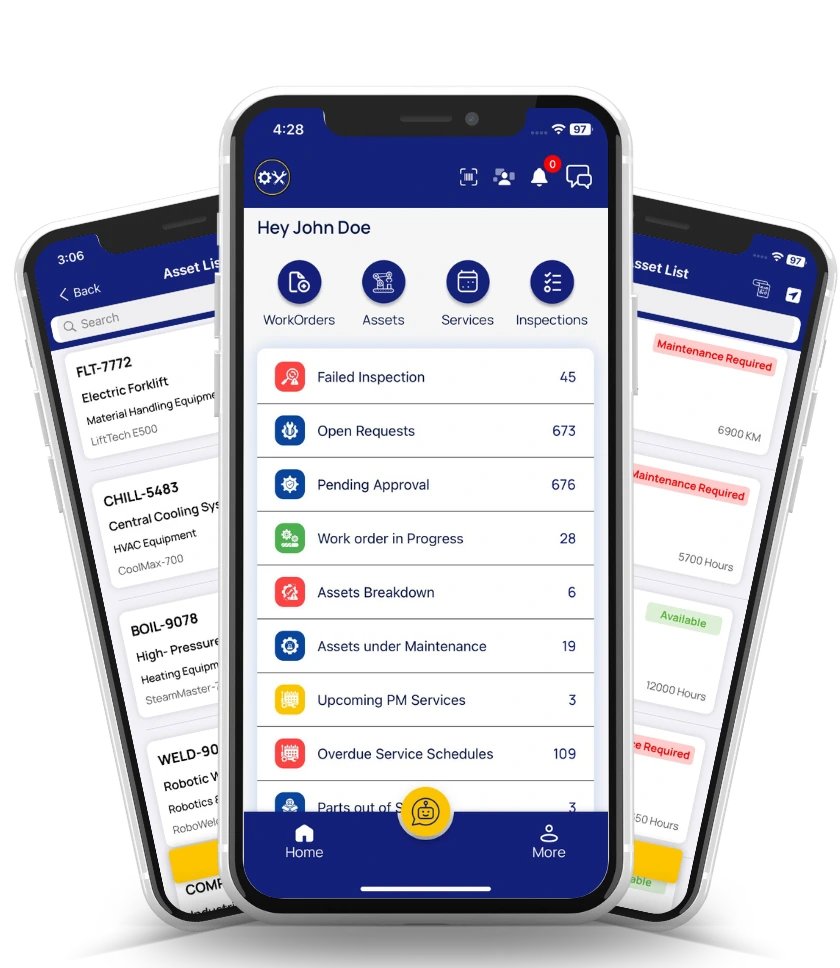
The asset register, energized and outage PM, test records, thermography findings, and outage planning all live on one platform — every panel and breaker carried as an asset with its full inspection, test, and defect history, so the program runs to schedule and the outage window is used to the minute.
Register
Panel & Breaker Hierarchy
Every HV and LV panel, breaker, and bus section carried as an asset in the distribution hierarchy — the map the whole program hangs on.
Schedule
Energized vs Outage PM
Tasks tagged by whether they need a shutdown, so live work runs on cadence and outage work queues for the window.
Record
Breaker Test History
Contact resistance, IR, and timing results trended per breaker — degradation visible across test cycles, not just this one.
Flag
Thermography → Work Order
Every hot spot logged against the joint and turned into a severity-ranked work order for the right outage or an emergency fix.
Plan
Outage Task Bundle
All de-energized tasks per panel bundled, kitted, and sequenced so a rare window delivers maximum completed work.
Prioritize
Criticality Ranking
Gear criticality drives the sequence so the most important switchgear is always serviced first when time is short.
Never Waste an Outage Window Again
Free forever plan — no card, no time limit. Register your switchgear, split the program into energized and outage work, trend every breaker test, and turn each thermography hot spot into a scheduled fix. Or book 30 minutes and we'll map your electrical distribution onto the platform end to end.
Frequently Asked Questions
Why does steel-plant switchgear need a tighter maintenance program than standard industrial gear?
Because the environment is far harsher. Conductive iron-oxide and graphite dust settles on insulators and bus creating tracking and flashover risk, arc-furnace and mill load cycling wears breakers and contacts on a faster clock, high ambient heat accelerates insulation aging, and mill vibration loosens connections. Each factor shortens the safe interval, so the manufacturer's default calendar under-maintains steel-plant gear.
Which switchgear tasks can be done without an outage?
Thermography and partial-discharge surveys run energized and are the front line of predictive detection — no shutdown needed. Cleaning, insulator inspection, connection torqueing, breaker contact and insulation-resistance testing, mechanism checks, and relay testing all require the gear de-energized. The core scheduling discipline is doing everything possible live so the rare outage window is reserved for what genuinely needs a shutdown.
What circuit breaker tests actually predict failure?
Four matter most: contact resistance (rising values mean eroded or contaminated contacts), insulation resistance (a decline signals moisture, dust tracking, or aging), timing and travel (slow or asymmetric operation reveals mechanism wear), and mechanism and trip-coil function (the worst latent fault is a breaker that won't trip on command). A breaker can look perfect and still fail to operate — only testing reveals its real condition.
Book a demo to see test trending.
How often should thermography be done on steel-plant switchgear?
More frequently than in a clean industrial site, because vibration and load cycling constantly create the loose and corroded connections thermography catches. Scans must run under representative production load — a hot joint only shows under current — and findings should be trended scan over scan, since a joint warming over time is a failure developing. Each flagged hot spot should become a severity-ranked work order, not a photo in a folder.
How do I run a switchgear program around a mill that almost never shuts down?
Build the program around the outage, not in spite of it. Maximize energized work so the outage list holds only true shutdown tasks; pre-plan, kit, and sequence every de-energized task per panel so a short window delivers maximum work; prioritize by gear criticality when time is short; and keep a live outage task list so you can ride any unplanned stop opportunistically. A CMMS that tags tasks energized-vs-outage and holds the bundled list is what makes this workable.
Start free to set it up.