More than 200,000 children are treated in U.S. emergency rooms every year for playground-equipment injuries — and roughly 79% of them come from a single hazard pattern: falls from equipment onto the surface below. A public playground safety inspection isn't a task to run from memory or a photocopied form, because a missed step becomes a missed hazard, and a missed hazard on a public playground becomes a child in an ambulance and a municipality in a liability case. The CPSC Public Playground Safety Handbook (Publication #325, 2025 update) and ASTM F1487 set the framework every school, park, childcare center, and facility team is measured against. This guide lays out the full inspection procedure — the seven areas your team touches on every visit, the monthly-versus-annual cadence, and the pass/fail thresholds that decide whether equipment stays in service — and shows how to run it as a documented, defensible program instead of ad-hoc calendar work. Book a free playground inspection-program review for your sites.
200,000+
Children treated in U.S. ERs yearly for playground-equipment injuries
79%
Of playground injuries result from falls — surfacing and fall-zone checks are the priority
#325
CPSC Public Playground Safety Handbook — the 2025-updated national benchmark
F1487
ASTM performance standard cited alongside CPSC in nearly every liability case
The Three Inspection Tiers · Cadence Decides Coverage
Playground safety isn't one inspection — it's three layers running on different clocks. A defensible program documents all three, because a liability claim will ask which inspection should have caught the hazard and whether it was performed on schedule.
DAILY / HIGH-FREQUENCY
Visual Safety Check
Quick walk-through before the site opens: surfacing contamination (glass, debris, animal waste), obvious damage, loose or missing hardware, vandalism, and standing water or ice.
Minutes per site
MONTHLY
Operator Inspection
Structured multi-point audit across all seven areas — fall zones, surfacing depth, hardware, entrapment, age-appropriate design, and ADA. Typically 45–60 minutes per playground.
Documented monthly
ANNUAL
CPSI-Certified Audit
Comprehensive review by a Certified Playground Safety Inspector against the full CPSC Handbook and ASTM F1487 — the record that carries the most weight in a liability defense.
Once per year
The Seven Inspection Areas · What Your Team Touches Every Visit
Every structured playground inspection covers the same seven areas. Below is the working reference — what to check in each, and why it matters under CPSC and ASTM.
01
Site Access & Perimeter
Fencing, gates, and signage intact; no unauthorized access to hazards; clear separation from roads and water. The 2025 Handbook strengthened fencing and signage guidance specifically.
02
Equipment Structural Integrity
Check for cracks, corrosion, loose or missing hardware, sharp edges, protrusions, and pinch points. Verify moving parts — swings, spinners — meet ASTM F1487 condition requirements.
03
Fall Zone & Impact Surfacing
The highest-priority area, since falls cause most injuries. Verify surfacing depth and coverage across the full use zone per ASTM F1292 impact attenuation and F2075 engineered wood fiber specs.
04
Entrapment & Entanglement
Test openings for head and neck entrapment, check for protrusions and gaps that catch clothing, and confirm strangulation-hazard warnings — a focus of the latest Handbook update.
05
Age-Appropriate Design
Confirm equipment scale, layout, and signage match the intended age group — separate provisions apply for children 6 months through 23 months under ASTM F2373.
06
ADA Accessibility
Accessible routes to equipment, ground-level play components, transfer stations and ramps, and firm accessible surfacing — required under ADA Title II for public playgrounds.
07
Amenities, Sanitation & Emergency
Benches, shade, trash, and drinking fountains in safe condition; site clean and hazard-free; emergency contact signage and site location markers present and legible.
Turn This Checklist Into a Live PM Program in 30 Minutes
Working session with our team — bring your playground asset list and inspection cadence. We'll show how OxMaint auto-generates monthly and annual inspection work orders, enforces photo capture and e-signatures, and logs a full audit trail against every asset.
Pass / Take Out of Service · The Thresholds That Decide
An inspection is only useful if it drives action. Every finding sorts into one of three dispositions — and the most important discipline is knowing which hazards mean the equipment comes out of service immediately, not next week.
Disposition
Condition
Action
Pass
No defects; surfacing adequate; hardware sound
Log the inspection with photos and sign-off; equipment stays in service
Monitor / Repair
Wear, minor damage, or surfacing below spec but not acute
Generate a work order with a deadline; re-inspect on the next cycle
Out of Service
Entrapment hazard, structural failure, exposed hazard, missing surfacing
Take equipment out of service immediately until repaired; document the closure
Paper Form vs Digital Inspection · Where Liability Is Won or Lost
A clipboard captures a checkmark. It doesn't prove the inspection happened, when, by whom, or in what condition the equipment was. When a claim arrives, that gap is the whole case. This is why facility teams move playground inspections onto a digital PM program.
Capability
Paper Form
Digital PM Program
Inspection scheduling
Manual calendar, easily missed
Auto-generated work orders on the right interval
Proof of condition
A checkmark, no evidence
Mandatory photo capture on every item
Accountability
A signature that can't be verified
Timestamped e-signature tied to the inspector
Audit trail
A binder someone has to find
Full history logged against each asset, instantly retrievable
Hazard follow-up
Depends on someone remembering
Findings become tracked work orders with deadlines
How OxMaint Runs Playground Safety Inspections
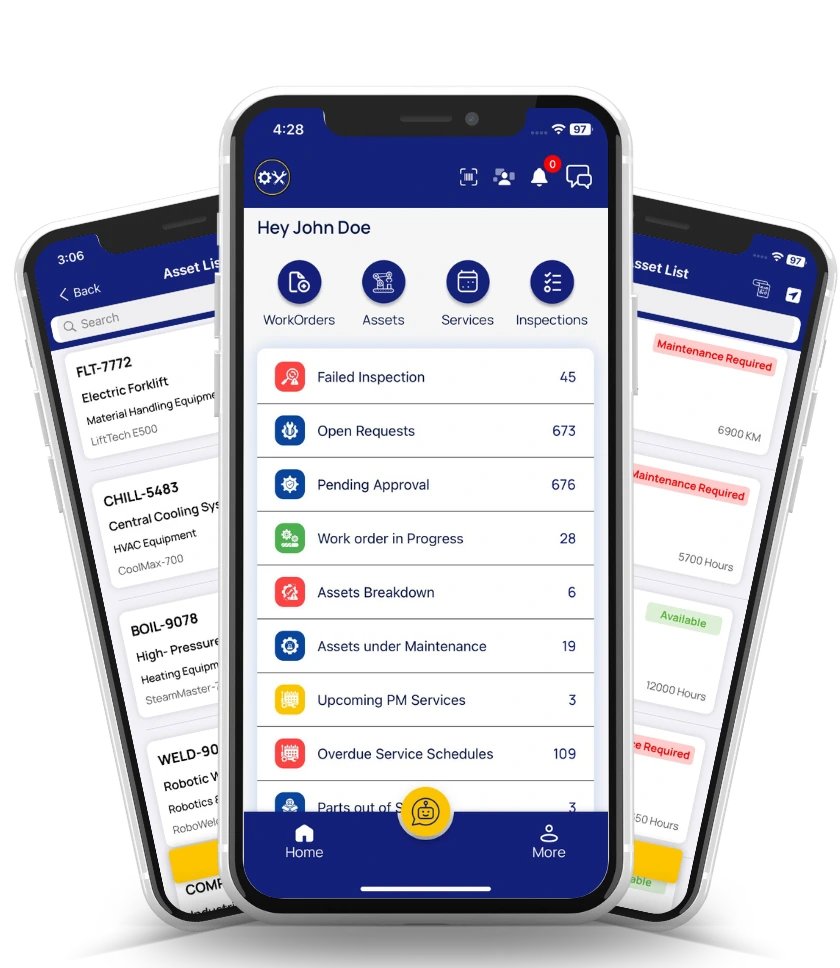
OxMaint turns the CPSC and ASTM checklist into a real preventive maintenance program — auto-generated inspection work orders, mobile execution with mandatory fields and photo capture, e-signatures on completion, and a full history logged against every playground asset so you can prove compliance in any audit.
Schedule
Auto-Generated Inspections
Daily, monthly, and annual inspection work orders fire on the right interval per asset — no missed cycles, no reliance on memory.
Mobile
Execution With Photo Capture
Technicians complete inspections on mobile with mandatory fields and photo capture on every item — proof of condition, not just a checkmark.
Sign-Off
Timestamped E-Signatures
Every completed inspection carries a timestamped e-signature tied to the inspector — accountability that holds up in a liability review.
Hazards
Findings Become Work Orders
A flagged hazard auto-generates a tracked repair work order with a deadline — nothing slips between inspection and fix.
History
Full Audit Trail Per Asset
Every inspection, photo, sign-off, and repair logged against the asset — a defensible compliance record retrievable in seconds.
Scale
One Site or a Whole Network
Manage a single playground or a multi-site municipal portfolio from one dashboard — standardized inspections across every location.
Make Every Playground Inspection Defensible
Move playground safety from ad-hoc calendar work to a standardized, measurable program. See how OxMaint schedules inspections, enforces photo capture and e-signatures, and builds an audit trail that protects children and your organization. Free forever plan available.
Frequently Asked Questions
What standards govern public playground safety inspections?
The primary reference is the CPSC Public Playground Safety Handbook, Publication #325, updated in 2025. It works alongside ASTM F1487 (the performance specification for public playground equipment), ASTM F1292 (impact attenuation of surfacing), F2075 (engineered wood fiber surfacing), and F2373 (equipment for children 6 months through 23 months), plus ADA Title II accessibility requirements. The CPSC Handbook is guidance rather than a federal mandate, but it's the industry benchmark and is routinely cited in liability cases — which is why documented compliance matters so much.
Book a review of your inspection program.
How often should a public playground be inspected?
Run three tiers. A daily or high-frequency visual check before the site opens catches surfacing contamination, obvious damage, and vandalism. A structured monthly operator inspection covers all seven areas and typically takes 45–60 minutes per playground. And an annual audit by a Certified Playground Safety Inspector (CPSI) provides the comprehensive review that carries the most weight in a liability defense. Documenting all three on schedule is what turns "we inspect regularly" into a defensible record.
What's the most important thing to inspect on a playground?
Fall zones and impact surfacing. About 79% of playground injuries come from falls from equipment onto the surface below, so verifying surfacing depth, coverage, and impact attenuation across the full use zone is the single highest-value check. That said, entrapment hazards, structural failures, and exposed hazards are the findings that require taking equipment out of service immediately — they don't wait for the next repair cycle.
Why move playground inspections off paper forms?
A paper checkmark can't prove the inspection actually happened, when, by whom, or in what condition the equipment was found. When an injury claim arrives, that evidence gap is the whole case. A digital program captures a timestamped photo on every item, ties an e-signature to the inspector, auto-schedules the next inspection, and turns any flagged hazard into a tracked work order — so the organization can demonstrate due diligence rather than just assert it. Schools running digital inspection programs also report meaningfully fewer playground injuries.
Sign up free to digitize your inspections.
Can OxMaint manage inspections across multiple playgrounds?
Yes. OxMaint auto-generates daily, monthly, and annual inspection work orders per asset, supports mobile execution with mandatory fields and photo capture, records timestamped e-signatures on completion, converts flagged hazards into tracked repair work orders with deadlines, and logs a full audit trail against every playground. Whether you manage one site or a multi-site municipal portfolio, inspections stay standardized and every record is retrievable in seconds for an audit. A free forever plan is available to trial the full workflow.