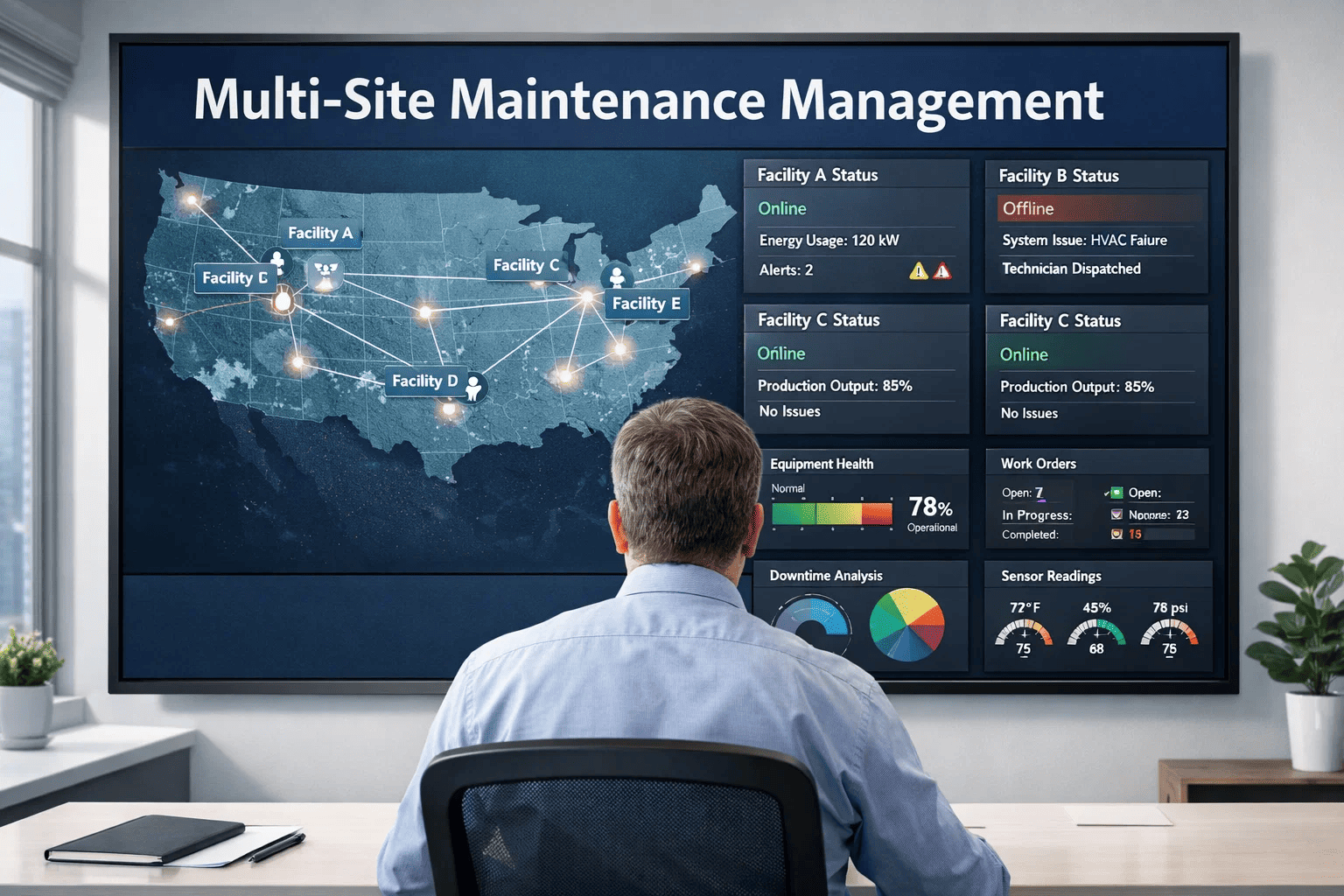
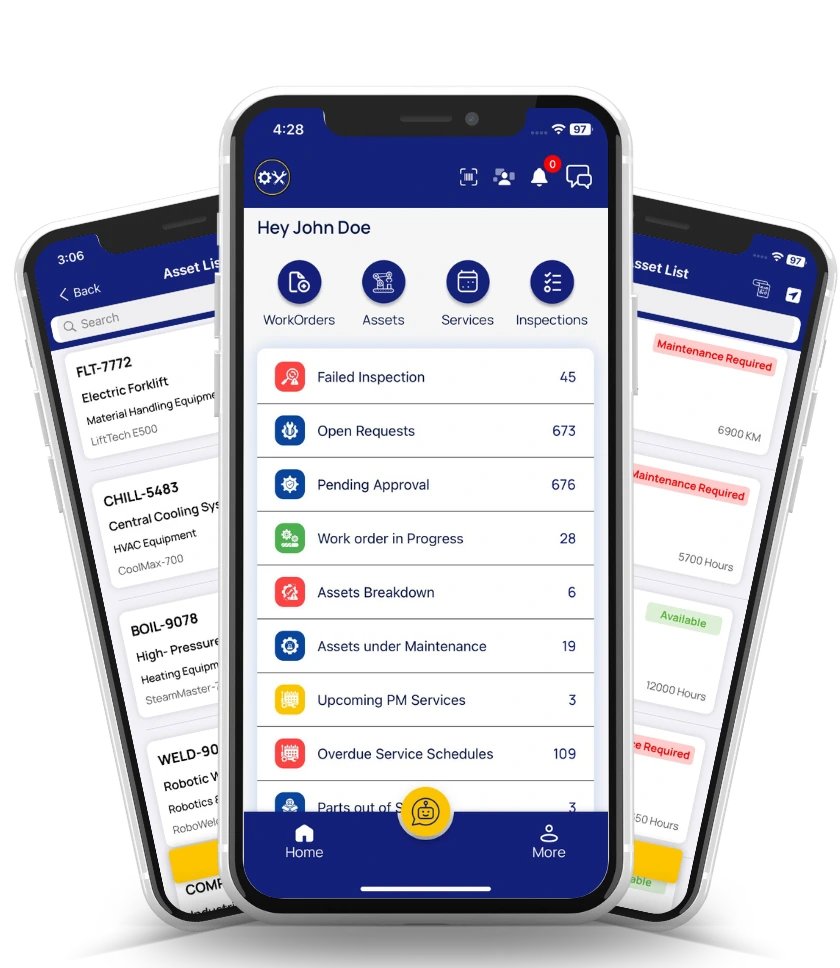
Offshore platform maintenance is the most reliability-intensive discipline in oil and gas — a single unplanned shutdown on a producing asset can cost $3M–$8M per day in lost revenue, before counting the safety and environmental exposure that comes with degraded equipment in a hostile marine environment. Effective offshore maintenance management means orchestrating preventive maintenance (PM) on subsea and topside systems, wellhead and crane inspections, safety-system testing, and spare-parts logistics across rotating crews — all under strict BSEE and API compliance. OxMaint is an AI-powered CMMS built for that exact pressure: it digitizes work orders, automates PM schedules, tracks every asset from the wellhead to the flare boom, and gives offshore O&M leaders the analytics they need to keep platforms producing. You can explore the full platform with a Start Free Trial or book a guided demo to see it mapped to your asset register.
Can your platform absorb another 14 hours of unplanned downtime this quarter?
Offshore oil and gas operators lose an average of $220K per hour when a critical asset fails mid-production. OxMaint replaces spreadsheet-driven reactive maintenance with an AI-powered CMMS that predicts failures, automates PM scheduling, and keeps BSEE and API compliance audit-ready — so your platform stays online, your crew stays safe, and your spare parts are where they need to be.
Offshore platform maintenance management: why the stakes are higher
Unlike onshore facilities, offshore platforms operate as isolated industrial islands — every spare part, every technician, and every hour of crane time must be planned days or weeks in advance. A failed subsea safety valve that takes 20 minutes to swap onshore can mean a 5-day supply-vessel round trip, a $300K logistics bill, and a regulatory report to BSEE.
The core problem is not effort — offshore O&M teams work hard. The problem is visibility. When PM schedules live in spreadsheets, work orders travel on paper, and asset histories are scattered across shift handover logs, compliance becomes a scramble and preventive maintenance degrades into reactive firefighting. An offshore CMMS centralizes every asset record, work order, inspection result, and spare-part transaction in a single system — giving reliability engineers, offshore technicians, and onshore planners one shared source of truth.
Critical offshore maintenance areas a CMMS must control
A fit-for-purpose offshore maintenance system must manage the full spectrum of platform assets — from seabed to flare tip. Below are the five maintenance domains where platform teams spend the most time and carry the most risk, and where a structured CMMS delivers the fastest payback.
Subsea equipment PM
Christmas trees, subsea control modules, umbilicals, and flowline connectors require time-based and condition-based PM schedules aligned to API 17D and API RP 17A. OxMaint tracks subsea inspection cycles, ROV intervention findings, and cathodic-protection readings — auto-generating the next work order before the compliance window closes.
Wellhead maintenance & inspection
Wellhead and tubing-head maintenance is governed by API 6A and BSEE SEMS regulations. OxMaint stores valve-test results, seal-replacement records, and pressure-test data per well — creating an audit trail that survives crew rotations and contractor changes.
Offshore crane maintenance & load testing
Platform cranes (pedestal, knuckle-boom, gantry) are the lifeline of offshore logistics. OxMaint schedules API 2C and LOLER-compliant load tests, wire-rope inspections, and slew-bearing greasing — sending automated alerts when recertification is within 30 days.
Safety system & ESD testing
Emergency Shutdown (ESD), fire-and-gas systems, and blowout preventers (BOP) demand documented proof of functional testing. OxMaint enforces test-frequency rules, captures pass/fail data digitally, and flags any safety-critical asset overdue for testing on the dashboard.
Spare-parts inventory & warehouse logistics
Offshore warehouse space is finite and supply-chain lead times are long. OxMaint maintains min/max levels by platform, tracks parts by serial number, and links each spare to its parent asset — so a technician knows instantly whether the right seal kit is on the platform or 200 miles away.
BSEE SEMS and API compliance: building an audit-ready maintenance system
BSEE's Safety and Environmental Management Systems (SEMS) rule (30 CFR 250) requires operators to document that every piece of safety-critical equipment has been inspected, tested, and maintained according to recognized engineering standards. A paper-based or spreadsheet-driven maintenance system makes SEMS audits painful — and makes post-incident investigations far slower.
| Compliance requirement | Spreadsheet / paper system | OxMaint offshore CMMS |
|---|---|---|
| PM schedule documentation (API RP 14C, 17D, 6A) | Manual, error-prone, lost in shift handovers | Automated PM engine with API-standard templates |
| Safety-critical asset testing records (SEMS) | Filing cabinets or shared drives; hard to search | Digital records per asset, instantly searchable |
| MOC (Management of Change) documentation | Email chains and Word docs; no version control | MOC workflow linked to asset history and work orders |
| Spare-part traceability for recalls | Manual stock takes; serial numbers often missing | Full serial-level traceability from warehouse to install |
| Audit response time (BSEE request) | 3–7 days of document gathering | Minutes — filtered reports exported on demand |
How OxMaint offshore maintenance software solves platform reliability
A mid-size offshore platform typically carries 2,000–5,000 maintainable assets and runs 8,000–15,000 work orders per year. OxMaint brings AI-powered structure to that complexity — connecting asset records, PM schedules, work-order execution, and analytics in one platform designed for offshore O&M teams.
AI-driven predictive maintenance
OxMaint analyzes vibration, temperature, and pressure-trend data from platform SCADA and condition-monitoring systems to flag degrading equipment before failure. Offshore teams using predictive alerts typically cut unplanned downtime 30–50% and reduce emergency callouts by 40%.
Automated PM scheduling engine
Define PM templates by API standard, manufacturer interval, or condition trigger. OxMaint auto-generates work orders, assigns them to the right crew shift, and escalates overdue tasks — eliminating the gaps that let safety-critical inspections slip through the cracks.
Mobile work-order execution
Technicians receive and close work orders on ruggedized tablets — even in offline mode. Photos, meter readings, and digital signatures are captured at the asset, so no data is lost between the deck and the onshore office. Paper work orders are eliminated entirely.
Spare-parts inventory optimization
OxMaint links every part to its parent asset, tracks on-hand quantities by platform warehouse, and uses consumption history to recommend min/max levels. Teams typically cut offshore inventory carrying cost 15–25% while improving parts availability for critical repairs.
The cost of staying on spreadsheets: a worked offshore example
Consider a four-platform offshore operation with 12,000 maintainable assets, running 40,000 work orders per year on spreadsheets and paper. The reliability team tracks PM compliance manually each month — and typically finds it hovering around 68%, meaning roughly one in three preventive tasks is late or missed.
After implementing OxMaint, the same operation typically sees unplanned downtime drop 35% (saving ~$9.2M in production revenue), emergency logistics fall 40% (saving ~$3.2M), and audit prep time shrink from weeks to hours. Even a conservative deployment pays for the platform within the first quarter — and the safety improvement from 95%+ PM compliance is immeasurable.
See OxMaint on your platform assets — book a 30-minute demo
We will load a sample of your asset register, map your PM templates to API standards, and show you exactly how OxMaint predicts failures, automates compliance, and cuts unplanned downtime. Bring your toughest offshore maintenance challenge.
Offshore platform maintenance & CMMS: frequently asked questions
What is offshore platform maintenance management?
Offshore platform maintenance management is the structured process of planning, scheduling, executing, and documenting preventive and corrective maintenance on all assets of an offshore oil or gas platform — including subsea equipment, wellheads, cranes, safety systems, and topside process machinery — under regulatory frameworks like BSEE SEMS and API standards. It is typically managed through a CMMS designed for the harsh, remote offshore environment.
Why is a CMMS important for offshore oil platforms?
An offshore CMMS is critical because unplanned platform downtime costs $220K or more per hour, and safety-critical equipment failures can trigger environmental incidents and regulatory penalties. A CMMS like OxMaint centralizes asset records, automates PM scheduling, tracks spare-parts inventory, and produces instant compliance reports — reducing unplanned downtime 30–50% and turning multi-day audit responses into minutes. You can see this in action with a Book a Demo session.
How does OxMaint handle BSEE SEMS compliance documentation?
OxMaint stores every inspection, test, and maintenance record against the specific asset it applies to, with full timestamp, technician, and result data. When BSEE requests documentation, you can filter by asset class, date range, or compliance standard and export a complete audit trail in minutes — rather than spending days gathering records from spreadsheets, shared drives, and paper logs.
Can OxMaint work offline on an offshore platform with limited connectivity?
Yes. OxMaint's mobile app is designed for offshore environments where satellite bandwidth is limited or intermittent. Technicians can receive work orders, capture photos and meter readings, and close tasks in fully offline mode on ruggedized tablets. Data syncs automatically to the central system once connectivity is restored — so no maintenance record is ever lost.
How long does it take to switch from spreadsheets to OxMaint offshore CMMS?
Most offshore operations are live on OxMaint within 4–6 weeks. The process involves importing your asset register, configuring PM templates to your API standards, setting up spare-parts min/max levels, and training offshore and onshore teams. OxMaint handles data migration for you, and the platform is designed so technicians can learn the mobile app in under an hour. Start with a Start Free Trial to test it on your own assets.
Stop managing offshore maintenance on spreadsheets
Join the offshore operators using OxMaint to predict failures, automate PM compliance, and keep platforms producing. Start your free trial today, or book a demo and we will show you the platform on your own asset data.
Free 14-day trial · No credit card