The 5S methodology has been the operating discipline of the world's most efficient factories since the Toyota Production System formalized it in post-war Japan — and every factory that runs 5S well will tell you the same thing: the framework itself is easy, and the audit is what makes it stick. Facilities that run monthly 5S audits with structured scoring report 30% fewer safety incidents and 25% faster material retrieval within the first six months. Facilities that skip the monthly audit see gradual erosion back to baseline conditions within 90 days, because Sustain — the fifth S — is the hardest one, and it doesn't happen on its own. This is where paper-based 5S audits break down at exactly the wrong moment. During an ISO certification review, an insurance inspection, or a customer audit, the requirement is not "we did 5S last year" — it's the last 12 months of scored audits with photo evidence, corrective action closures, and trend data by zone. This guide is the working 5S audit reference: the five pillars with the specific things each one measures, the 0-4 scoring rubric with score-band interpretation, the field-ready audit form organized by pillar, the corrective action workflow that closes findings, and the CMMS capabilities that turn 5S audit from a clipboard exercise into a controlled digital process. Book a free 5S audit workflow demo against your current program.
5 pillars
Sort · Set in Order · Shine · Standardize · Sustain — the Toyota framework since post-WWII
30%
Fewer safety incidents in facilities running structured monthly 5S audit programs
25%
Faster material retrieval when Set in Order and Shine are consistently scored above 80%
90 days
Erosion window — facilities skipping monthly audits revert to baseline within this timeframe
The Five Pillars · What Each S Actually Audits
Every 5S audit measures the same five pillars in the same order. What separates a real audit from a walkthrough is that each pillar has specific criteria, each criterion gets a numeric score, and the aggregate produces a defensible number you can track over time and compare across zones and shifts.
1S
Seiri
Sort
Remove everything unnecessary from the workspace · red-tag items of uncertain use · dispose or relocate
Criteria: unused tools · obsolete inventory · broken equipment · outdated documents · personal items
2S
Seiton
Set in Order
Every remaining item has a designated location · visual identification · retrieval in under 30 seconds
Criteria: shadow boards · labeling · floor tape marking · height and quantity limits · walkway clearance
3S
Seiso
Shine
Cleanliness as inspection · equipment surfaces free of dust, oil, debris · cleaning reveals abnormalities
Criteria: floors · machine surfaces · overhead structures · cleaning tools available · leak inspection during cleaning
4S
Seiketsu
Standardize
Documented standard for every workstation · visual management applied consistently · rules obvious at a glance
Criteria: SOPs posted · color coding · signage · standard work sheets · deviation is visible
5S
Shitsuke
Sustain
Behavior discipline · audit cadence maintained · corrective actions closed · culture reinforced
Criteria: audit history · closed CAs · team engagement · training records · management review
The 0–4 Scoring Rubric · How to Score Every Criterion
Consistent scoring is what makes 5S audit data comparable across zones, shifts, and months. The 0-4 rubric below is the standard framework — used across manufacturing, warehouse, and office environments — and it removes the subjectivity that kills paper-based audits.
0
No Implementation
Standard does not exist · condition observed is significantly below acceptable · major deviations obvious
1
Below Standard
Standard exists but is not being followed · multiple non-compliances visible in the audit zone
2
Partial Compliance
Standard is followed inconsistently · some workstations comply, others do not · gaps documented
3
Meets Standard
Standard is followed consistently · minor deviations only · no major findings · zone passes audit
4
Exceeds Standard
Standard is followed and continuously improved · visible ownership · innovations beyond the baseline
Score Band Interpretation · What Your Number Actually Means
Individual scores aggregate to a facility percentage — sum of actuals divided by maximum possible × 100. The three score bands below are the industry-standard interpretation, and they map directly to the action required from leadership.
< 60%
Unacceptable
Program is failing · leadership intervention required · training and coaching needed · rescore in 30 days
60–80%
Development Phase
Standards exist but not consistently practiced · targeted improvements on lowest-scoring pillar · monthly audit cadence
> 80%
Sustainably Established
Culture is embedded · maintain audit cadence · focus on Sustain pillar to prevent erosion · benchmark other zones
The Field-Ready Audit Form · Working Reference by Pillar
Below is the working audit form technicians and 5S coordinators use in the field — every criterion grouped by pillar, with the specific thing to observe and score on the 0-4 rubric. Print it, mobile-deploy it, or import as an audit template in the CMMS. 20-30 minutes per zone at standard cadence.
Deploy Digital 5S Audit in 30 Minutes
Working session with our lean team — bring your current 5S template. We'll import your audit form as mobile scoring against your zones, configure the 0-4 rubric with mandatory photo capture, and set corrective action workflows to auto-fire on non-conformance.
Corrective Action Workflow · What Happens When You Score Below 3
Any criterion scored below 3 (Meets Standard) generates a corrective action. Without a closed-loop workflow, audit findings pile up in a spreadsheet nobody reads, and the audit becomes an exercise instead of a driver. The 4-step workflow below is what closed-loop 5S looks like.
W1
Finding Logged
Score below 3 auto-generates corrective action WO · zone, pillar, criterion, photo evidence attached · owner assigned
→
W2
Root Cause & Action
Owner documents root cause · immediate action to correct · systemic action to prevent recurrence · target close date
→
W3
Execute & Evidence
Corrective action completed · photo evidence captured · e-signature on completion · WO status closed
→
W4
Verify at Next Audit
Next audit re-scores the same criterion · verifies score improved to 3+ · recurrence tracked for systemic issues
Expert Perspective · Sustain Is the Hardest S — and the CMMS Is How You Get It
Every 5S coach will tell you the same thing: the first four pillars are execution, and Sustain is culture. Any facility can run a 5S event, red-tag the clutter, install shadow boards, print SOPs, and take a photo for the newsletter. Ninety days later that same facility is right back where it started because Sustain — the fifth S — is the hardest one, and it doesn't happen on its own. The audit is the mechanism that makes Sustain real. But paper audits die at Sustain because the friction is too high. A clipboard tour, hand-scored on a form, transcribed later into a spreadsheet, findings written in a separate document, corrective actions tracked in email, evidence stored in a shared drive nobody indexes — the workflow itself is the reason facilities skip the audit after the third or fourth cycle. Digital changes the equation. When the audit form lives on a phone with the 0-4 rubric enforced, mandatory photo capture on any score below 3, corrective action WOs auto-generated with owners assigned, closure evidence attached, and the score trend visible per zone per pillar on a live dashboard — the friction disappears and the audit actually gets done. That's the facility where Sustain sticks. That's the facility running above 80% two years after the 5S event, not reverting to 40% ninety days after it.
Sustain Is Culture, Not Execution
First four pillars are tactical · Sustain is behavioral · the audit cadence is what makes the behavioral pillar operationally real.
Friction Kills Sustain
Paper audits die because the workflow is too heavy · digital audits with auto-workflow eliminate the friction that erodes program discipline.
Trend Beats Snapshot
A single audit score means nothing · trend line per pillar per zone over 12 months is what proves the program is working.
How OxMaint Delivers Manufacturing 5S Audit as a Digital Discipline
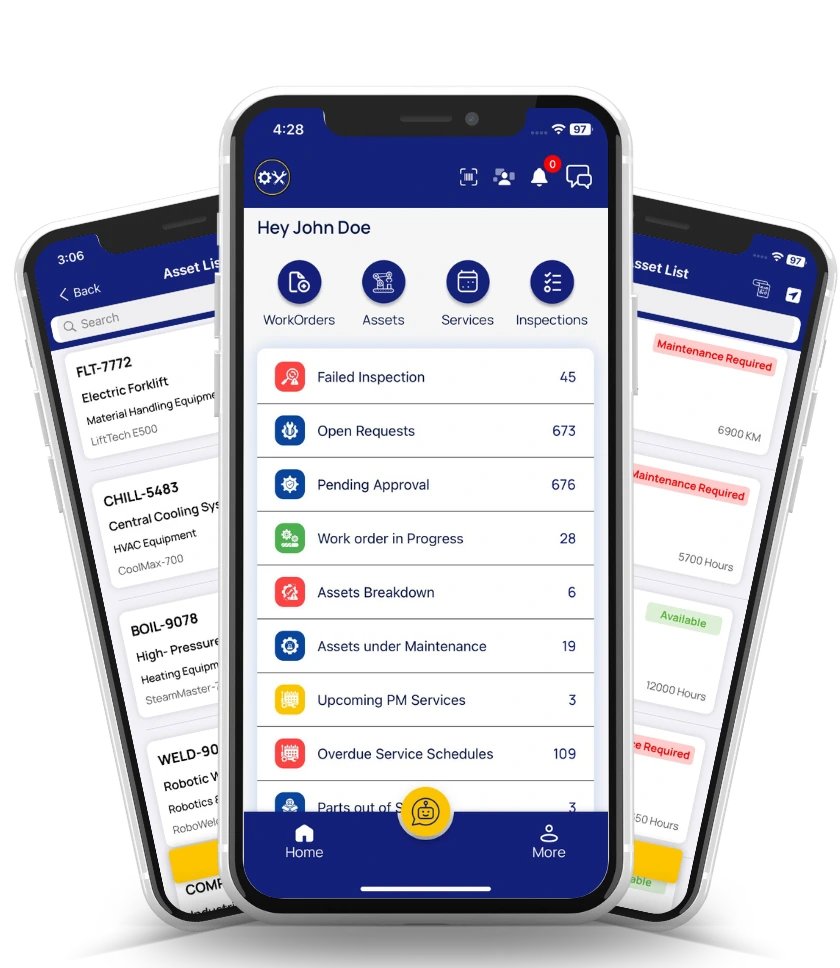
OxMaint runs the full 5S audit workflow on mobile — import your existing form, configure the 0-4 rubric, deploy audits at your chosen cadence, capture photo evidence, auto-generate corrective action WOs on any sub-3 score, and track trend lines per pillar per zone across the facility.
Template
5-Pillar Audit Form Pre-Built
Import your existing 5S form or use the pre-built template · Sort · Set in Order · Shine · Standardize · Sustain organized by pillar
Scoring
0-4 Rubric Enforced
Every criterion scored on standardized rubric · aggregate percentage auto-calculated · pillar and zone roll-ups on dashboard
Mobile
Field Execution with Evidence
Auditor completes on phone · mandatory photo capture on any score below 3 · e-signature on completion · offline sync
CA
Auto Corrective Action Workflow
Any sub-3 score auto-fires corrective action WO · owner assigned · target close date · root cause and systemic action captured
Trend
Score Trend Dashboard
Live trend line per pillar per zone · 12-month view · lowest-scoring pillar auto-highlighted · benchmark across zones
Export
Audit-Ready Evidence Package
Complete audit history · scores · photos · CA closures · trend charts · exportable as PDF for ISO, customer, insurance audits
Turn 5S Audit From Clipboard to Digital Discipline
Stop watching your 5S score erode 90 days after the last event. See how OxMaint delivers the full digital 5S workflow — 5-pillar template, 0-4 mobile scoring, mandatory photo evidence, auto corrective action WOs, and trend-line dashboards. Free forever plan available.
Frequently Asked Questions
What are the five pillars of the 5S manufacturing audit?
The five pillars — from the Toyota Production System post-WWII Japan — are Sort (Seiri: remove everything unnecessary from the workspace, red-tag uncertain items), Set in Order (Seiton: designated location for every remaining item, retrieval under 30 seconds, shadow boards and floor tape), Shine (Seiso: cleanliness as inspection, cleaning reveals abnormalities like leaks), Standardize (Seiketsu: documented standard for every workstation, visual management applied consistently), and Sustain (Shitsuke: behavior discipline, audit cadence, corrective actions closed, culture reinforced). Some organizations add Safety as a sixth pillar to bring PPE, electrical safety, chemical labeling, and ergonomics into the same audit workflow. A standard manufacturing 5S audit covers 20-25 items across the pillars, takes 20-30 minutes per zone, and runs on a weekly or monthly cadence.
How is a 5S audit scored?
The industry-standard rubric scores each criterion on a 0-4 scale where 0 = No Implementation (standard does not exist or major deviations obvious), 1 = Below Standard (standard exists but not being followed, multiple non-compliances visible), 2 = Partial Compliance (standard followed inconsistently, some workstations comply and others do not), 3 = Meets Standard (standard followed consistently, minor deviations only, zone passes), and 4 = Exceeds Standard (standard followed and continuously improved, visible ownership, innovations beyond baseline). Aggregate score is the sum of actuals divided by maximum possible × 100. Score bands: below 60% is unacceptable and requires leadership intervention, 60-80% is development phase requiring targeted improvements on lowest-scoring pillar, above 80% is sustainably established.
Book a free demo to see live scoring per pillar.
How often should a 5S audit be performed?
Monthly is the standard cadence for sustained programs. Weekly is appropriate for zones in development phase or after a 5S event to establish behavior. Quarterly is appropriate only for fully sustained zones scoring above 85% consistently. The critical failure point is skipping the monthly cycle: facilities that go 90 days without a formal audit revert to baseline conditions, because Sustain — the fifth pillar — is the hardest one and does not happen on its own. Weekly walkthroughs by area supervisors can supplement but never replace the formal scored audit. The formal audit produces the documented score, the trend line, the corrective action history, and the compliance evidence for ISO and customer audits — a walkthrough produces none of that.
Why do paper-based 5S audits fail?
Paper 5S audits fail at Sustain because the workflow friction is too high. A clipboard tour, hand-scored on a form, transcribed later into a spreadsheet, findings written in a separate document, corrective actions tracked in email, evidence stored in a shared drive nobody indexes — the workflow itself is why facilities skip the audit after the third or fourth cycle. Digital audits eliminate the friction: the form lives on a phone with the 0-4 rubric enforced, mandatory photo capture on any score below 3, corrective action WOs auto-generated with owners assigned, closure evidence attached, and score trend visible per zone per pillar on a live dashboard. That's the facility where Sustain sticks and the program stays above 80% two years after the initial 5S event.
Sign up free to trial digital 5S workflow.
How does OxMaint handle 5S audits specifically?
OxMaint runs the full digital 5S workflow. Import your existing 5S audit form or use the pre-built 5-pillar template. Every criterion is scored on the standardized 0-4 rubric with aggregate percentage auto-calculated and pillar/zone roll-ups on the dashboard. Auditors complete on their phone with mandatory photo capture on any score below 3, e-signature on completion, and offline sync for plant dead zones. Any sub-3 score auto-fires a corrective action work order with owner assigned, target close date, and space to document root cause and systemic action. Score trend charts show per-pillar per-zone performance over 12 months with lowest-scoring pillar auto-highlighted. Complete audit history exports as an audit-ready PDF package for ISO, customer, and insurance reviews. Free forever plan available to trial the full workflow.
Book a free demo to see the workflow live.