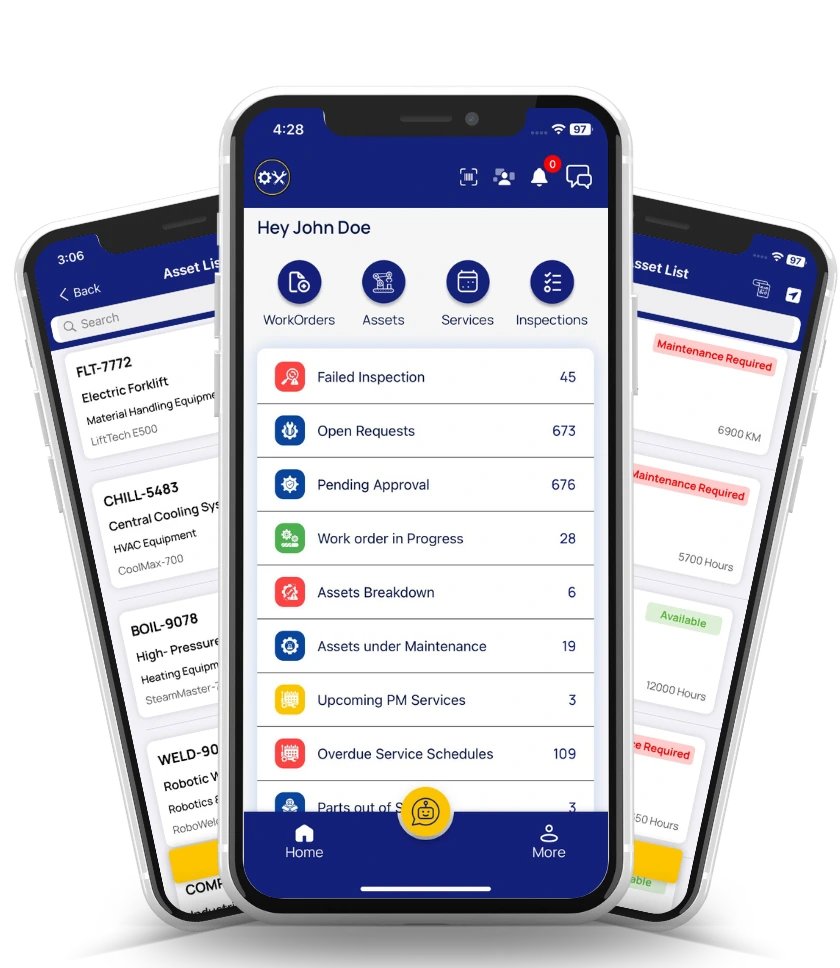
Hydroelectric power plant maintenance is the discipline of keeping turbines, generators, penstocks, and dam gates operating at peak reliability while satisfying strict FERC and dam safety oversight requirements. A robust hydro plant maintenance program blends heavy rotating equipment reliability—through turbine-generator overhauls and hydroelectric generator maintenance—with rigorous civil structure inspections and predictive analytics. By deploying a specialized hydroelectric CMMS, O&M teams transition from reactive firefighting to planned, compliance-ready execution. OxMaint empowers hydro facility managers to automate penstock inspection schedules, gate maintenance, and preventive maintenance workflows, drastically reducing unplanned downtime. Explore how modernizing your maintenance strategy preserves asset life, or Start Free Trial to see the platform in action.
Are Your Hydro Turbine Maintenance Schedules Ready for the Next FERC Audit?
OxMaint centralizes your dam maintenance program, penstock inspections, and work order execution into one AI-powered system—ensuring your hydroelectric facility operates at maximum reliability without compliance gaps.
Building a Dam Safety Maintenance Program That Passes Every Audit
Hydroelectric facilities operate under intense regulatory scrutiny. FERC Part 12 inspections and state dam safety mandates require documented, verifiable maintenance records for every critical component—from spillway gates to penstock welds. A compliant dam maintenance program requires a single source of truth for all maintenance activities.
Civil Structure Integrity
Schedule and document dam gate maintenance, spillway inspections, and penstock condition assessments. OxMaint maintains digital records of every visual inspection and NDT result, ensuring you can produce historical compliance data in minutes.
Rotating Equipment Reliability
Standardize hydro turbine maintenance and generator overhauls based on operating hours, vibration trends, and seasonal generation cycles. Proactive PM schedules extend the mean time between failures (MTBF) for critical generating assets.
Comprehensive Audit Readiness
When FERC inspectors request maintenance histories for your dam gates or spillways, a hydro plant software like OxMaint instantly generates compliance reports—eliminating the risk of regulatory fines and forced outages due to missing documentation.
Hydro Turbine Maintenance & Penstock Inspection Checklist
A well-structured hydro plant inspection program relies on standardized checklists. These critical task groups form the backbone of effective hydroelectric facility management.
Turbine-Generator Overhaul
- Wicket gate linkage adjustment and lubrication
- Runner cavitation inspection and weld repair
- Stator winding resistance and polarization index testing
- Guide bearing clearance and oil analysis
Penstock & Civil Inspection
- Penstock interior and exterior coating assessment
- Expansion joint and anchor block inspection
- Dam gate maintenance: seal replacement and corrosion mapping
- Spillway weir and stilling basin debris clearing
| Inspection Type | Frequency | Critical Focus Area | Compliance Standard |
|---|---|---|---|
| Dam Safety Inspection | Annual | Structural integrity, seepage monitoring | FERC Part 12 |
| Penstock Inspection | Bi-Annual | Weld joints, lining condition, anchors | ASME B31.1 |
| Hydro Turbine Maintenance | 5–7 Years | Runner cavitation, bearing wear | OEM Specs / ISO 55000 |
| Generator Overhaul | 10–12 Years | Stator winding, rotor poles, excitation | IEEE 62 / NEMA MG1 |
| Spillway Gate Testing | Quarterly | Hydraulic systems, gate hoist, limit switches | FEMA / FERC |
Calculating the ROI of Hydro Plant Software for Water Turbine Maintenance
Upgrading from spreadsheets to a hydroelectric CMMS is an investment with measurable returns. Use this formula to project the net annual savings of digitizing your water turbine maintenance and facility management.
Real-World Worked Example
Consider a 120 MW hydroelectric facility managing 180 critical assets. The plant averages 4 days of unplanned downtime per year due to turbine bearing failures and gate malfunctions, costing roughly $60,000 per day in lost generation revenue—totaling $240,000 annually. By implementing OxMaint's predictive maintenance triggers and automated PM schedules, the plant reduces unplanned downtime by 35% (saving $84,000), cuts maintenance labor overtime by 15 hours per week (saving $23,400), and avoids an estimated $10,000 in potential FERC compliance fines. With an OxMaint software investment of $18,000 per year, the net annual savings equal $99,400, yielding an ROI of 552% in the first year alone.
How OxMaint Solves Hydroelectric Facility Management
OxMaint is an AI-powered CMMS and EAM platform built to handle the heavy-duty demands of hydroelectric operations. Here is how specific capabilities map directly to your facility's most pressing maintenance challenges.
AI-Driven Predictive Maintenance
OxMaint analyzes vibration, temperature, and oil degradation data from your hydro turbines to predict bearing and stator failures before they trigger forced outages. Outcome: Cut unplanned water turbine maintenance downtime by 30–50% and extend asset lifespan significantly.
Automated Compliance & Audit Trails
Every work order, dam gate maintenance log, and penstock inspection form is digitally stamped and securely stored. Generate FERC-ready reports in seconds. Outcome: Achieve 100% audit readiness and eliminate the risk of regulatory fines due to missing documentation.
Smart Spare-Parts Inventory
Track critical spares like runner seals, wicket gate components, and generator bearings in real-time. OxMaint automatically reorders parts when stock hits minimum thresholds. Outcome: Prevent 95% of maintenance delays caused by missing parts while reducing inventory carrying costs by 20%.
Mobile Work Order Execution
Technicians receive and complete work orders on mobile devices—even offline in remote hydro plant galleries. Capture photos of penstock wear and sign off on dam safety inspections instantly. Outcome: Eliminate paper work orders and reduce data entry time by 15+ hours per week.
"Switching to OxMaint transformed our hydroelectric maintenance program. We went from digging through filing cabinets for FERC inspections to pulling complete digital histories in seconds. Our unplanned turbine downtime has dropped dramatically."
See OxMaint on Your Assets — Book a 30-Min Demo
Discover how a purpose-built hydroelectric CMMS can streamline your dam maintenance program, automate penstock inspections, and maximize generating reliability.
Hydro Plant Maintenance & CMMS Questions Answered
What does a hydro plant maintenance program typically include?
A comprehensive hydro plant maintenance program includes preventive maintenance for turbines and generators, penstock inspection, dam gate maintenance, spillway testing, and electrical PM. It requires scheduling overhauls based on operating hours, conducting regular civil structure safety inspections, and maintaining strict compliance documentation for FERC and local dam safety regulations.
How does a CMMS improve hydro turbine maintenance?
A hydroelectric CMMS like OxMaint automates work order generation, tracks asset history, and schedules preventive maintenance based on actual operating data rather than guesswork. This reduces unplanned downtime, optimizes spare parts inventory, and ensures every maintenance action is documented for compliance. You can Book a Demo to see exactly how it fits your turbines.
How often should penstock inspections be performed?
Penstock inspections should generally be performed bi-annually, with a detailed internal inspection conducted every 5 to 10 years depending on the lining condition and regulatory requirements. Routine external inspections should monitor for leaks, joint separation, and protective coating degradation, all of which should be logged in your hydro plant software for trend analysis.
What is the difference between preventive and predictive maintenance in hydroelectric facilities?
Preventive maintenance is scheduled based on fixed time intervals or operating hours—such as changing turbine guide bearing oil every 8,000 hours. Predictive maintenance uses condition-monitoring data (vibration analysis, thermal imaging, oil degradation) to trigger maintenance only when an asset shows signs of impending failure, optimizing maintenance spend and preventing unnecessary outages.
How long does it take to implement hydro plant software?
Implementing a hydroelectric CMMS typically takes 4 to 8 weeks, depending on the number of assets being migrated and the complexity of your existing maintenance schedules. OxMaint offers streamlined onboarding and data migration tools to help your team transition smoothly from spreadsheets or legacy systems. You can Start Free Trial today to explore the setup process.
Ready to Modernize Your Hydroelectric Maintenance Strategy?
Join the reliability teams using OxMaint to eliminate reactive maintenance, automate compliance, and keep the power flowing.
Free 14-day trial · No credit card required