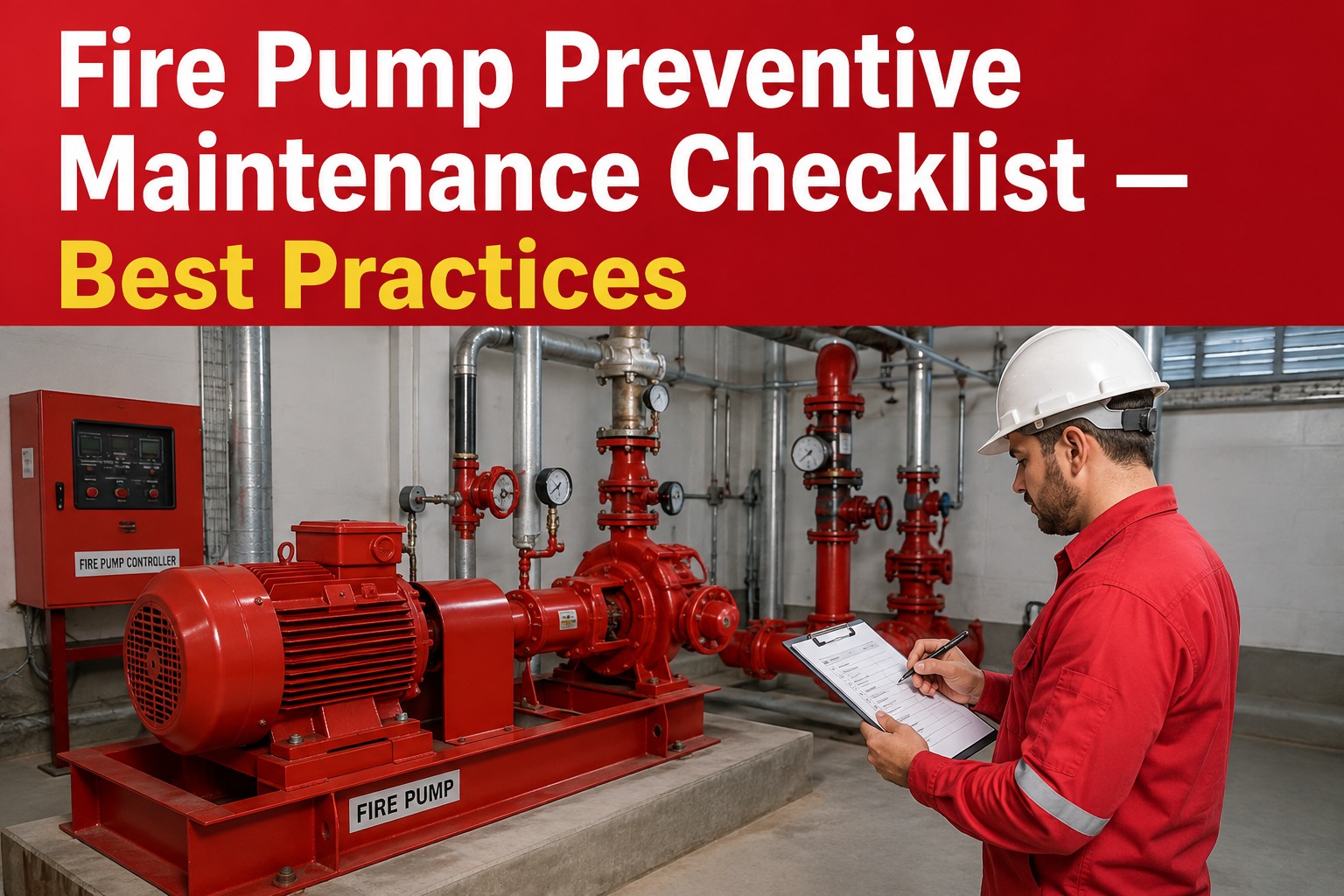
A fire pump that has sat idle for a week is not the same fire pump it was seven days ago — bearings settle, packing dries, batteries drift, and diesel fuel begins its slow decay into varnish. The weekly churn test exists for exactly this reason: to prove, under supervised no-flow conditions, that the pump will start, reach speed, hold pressure, and protect the building the moment a sprinkler head fuses open. NFPA 25 makes the test mandatory for every diesel fire pump and for electric pumps in specific high-risk configurations — but the standard only tells you what to test. It doesn't tell you how to make the log defensible when the AHJ arrives, or how to keep 52 weekly records per pump traceable across a portfolio of buildings. This guide walks the complete churn test procedure, the exact readings you must capture, and the audit-ready log format that survives every inspection. Book a free demo to see the digital churn test log in action.
10min
Minimum run time · Electric fire pump churn test
30min
Minimum run time · Diesel fire pump churn test
140%
Maximum churn pressure ceiling · % of rated pressure (NFPA 20)
20sec
Diesel engine must reach rated speed within this window of start signal
What the Churn Test Is Actually Proving
"Churn" describes the condition of a fire pump running at zero flow — the discharge valve is closed, water is not moving through the system, and the pump is spinning against dead-head pressure. It sounds trivial, but a properly executed churn test verifies four independent systems in a single 10- or 30-minute window: the controller detects the pressure drop and auto-starts, the driver (motor or engine) reaches rated speed within the standard's time limit, the pump develops discharge pressure at or below 140% of rated, and the packing, seals, bearings, and circulation relief valve all behave under load. When any one of those fails, the churn test surfaces it while the pump is under a technician's supervision — not at 2 AM during a real fire, when nobody is watching.
Weekly vs Monthly · Who Runs Churn Tests Every Week
NFPA 25 does not require every fire pump to be churn-tested weekly. The 2014 edition and forward set the default cadence at monthly for standard electric pumps, weekly for diesels and for higher-risk electric configurations. Getting the frequency wrong in either direction is a compliance finding: over-testing wastes labour hours; under-testing is a direct NFPA 25 violation the AHJ will cite.
WEEKLY CHURN TEST REQUIRED
All diesel-driven fire pumps — 30 min minimum run
Electric pumps serving high-rise buildings beyond FD pumping capacity
Electric pumps with vertical turbine configuration
Electric pumps with limited service controller
Electric pumps drawing from low-pressure suction source
MONTHLY CHURN TEST · WEEKLY VISUAL
Standard electric fire pumps — 10 min minimum monthly run
Weekly visual inspection of pump room still required
Weekly jockey pump cycling verification
Weekly gauge and controller status check
Weekly heater and ventilation confirmation
When in doubt on which category applies, the Authority Having Jurisdiction has the final call — and many local fire codes require weekly churn tests on all pumps regardless of NFPA's baseline. Sign up free to configure the correct cadence per pump across your entire building portfolio.
The Complete Churn Test Procedure · Step by Step
The procedure below reflects NFPA 25 §8.3 for a standard supervised (non-automated) churn test. Every step is a distinct evidence point on the log — skipped steps become audit findings even if the pump itself performed correctly.
A1
Notify the Monitoring Company
Place the fire alarm system on test to prevent unwanted dispatch. Record confirmation number and operator name on the log.
A2
Verify Controller in AUTO
Confirm controller selector switch is in AUTO position — the #1 finding on annual audits is a controller left in MANUAL after maintenance. Photograph the switch position.
A3
Record Static System Pressure
Log discharge and suction gauge readings before start. This is the baseline against which the churn reading is measured.
A4
Visual Walk of Pump Room
Confirm pump room temperature above 40°F (4°C), no leaks under pump base, no obstructions, adequate ventilation for diesel exhaust.
B1
Trigger Auto-Start via Solenoid Drain
Open the test solenoid drain to simulate a pressure drop. The controller should auto-start the pump without manual intervention.
B2
Record Start Time & Time-to-Speed
Diesel engines must reach rated speed within 20 seconds of the start signal. Electric motors within 5-10 seconds. Failure of either is an immediate fail.
B3
Verify Circulation Relief Valve Discharge
The circulation relief must open and discharge water within seconds of run to prevent pump overheating at no-flow. Confirm visually.
B4
Monitor Continuously Through Run
Watch packing gland leakage, listen for cavitation or unusual bearing noise, verify no controller trouble signals — technician must remain in attendance the entire run.
C1
Suction Pressure at Churn
Log the gauge reading — a drop below expected static suction indicates supply-side restriction and requires investigation.
C2
Discharge Pressure at Churn
Must not exceed 140% of rated pressure per NFPA 20. Exceeding this ceiling risks damage to sprinkler heads, fittings, and hoses downstream.
C3
Diesel-Specific · Oil Pressure & Coolant Temp
For diesel drivers, log oil pressure, coolant temperature, battery voltage, and fuel level at 5-minute intervals through the 30-minute run.
C4
Packing Gland Leakage Rate
Approximately one drip per second is normal for lubrication. No leakage means packing is over-tight (will burn); excessive leakage means adjustment required.
D1
Close Test Solenoid & Verify Shutdown
Close the test drain. System pressure should rebuild via jockey pump, and the main pump should shut down after the controller timer expires.
D2
Log Final Static Pressure
Confirm system returns to normal static pressure within acceptable rebuild time and jockey pump cycles correctly to hold pressure.
D3
Restore Monitoring & Sign Log
Contact monitoring company to take alarm out of test. Technician e-signs the log with time, date, and any defects noted.
D4
Trigger Corrective Work Orders
Any failed item — high churn pressure, slow start, packing issue, controller trouble — auto-generates a corrective work order linked to the pump asset.
Run This Procedure From the Technician's Phone
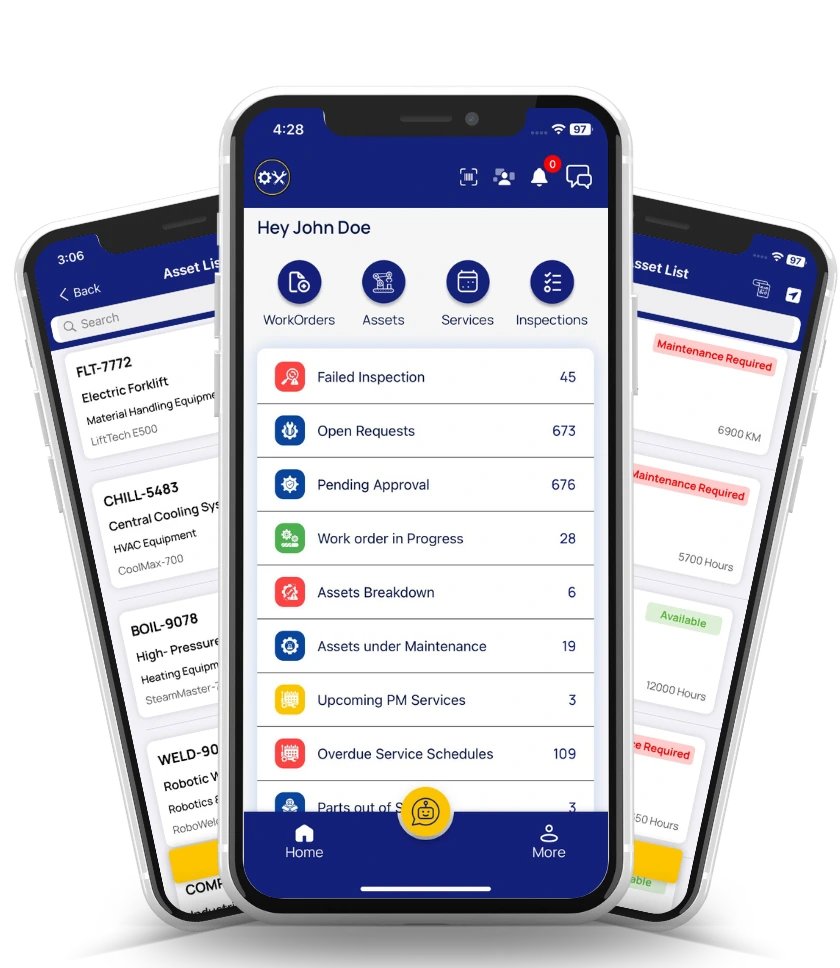
See a live churn test flow — auto-scheduled every 7 days, delivered to the pump technician's mobile, readings captured with photo proof of gauges, e-signed and locked to the asset history in 30 minutes.
The Weekly Churn Test Log Format
NFPA 25 requires records of every test but does not prescribe a form. What auditors expect to see is a log entry that traces the full test event: who ran it, when, what the pump did, what readings were captured, whether any defects were noted, and what corrective action followed. The format below is the working structure used across most compliant fire protection programs.
Header Fields
Pump ID / Asset TagFP-101
Building / ZoneBldg A · Sub-basement
Date & Time StartedAuto-timestamp
Technician Name / IDSigned digitally
Driver TypeDiesel / Electric
Rated Pressure & FlowFrom nameplate
Readings Captured
Static Suction Pressurepsi · pre-start
Static Discharge Pressurepsi · pre-start
Suction Pressure at Churnpsi · during run
Discharge Pressure at Churnpsi · ≤140% rated
Time to Rated Speedsec · ≤20 for diesel
Total Run Timemin · ≥10 elec / ≥30 diesel
Diesel-Only Readings
Oil Pressurepsi @ 5-min intervals
Coolant Temperature°F @ 5-min intervals
Battery Voltage (both)V · pre & during
Fuel Level% · min 67% per NFPA
Observations & Sign-Off
Packing Gland LeakageDrip rate / OK / adjusted
Circulation ReliefDischarging / not
Controller SignalsNormal / trouble noted
Defects NotedFree text + photo
Corrective WO #Auto-linked
Technician E-SignatureLocked timestamp
Pass / Fail Criteria at a Glance
Every reading captured has a defined acceptance band. When a value crosses the band, the test becomes a fail — the log records it, and the corrective work order fires automatically. The table below is the quick-reference version technicians use in the pump room.
Reading / Check
Pass Criterion
Fail Trigger
Priority
Discharge pressure at churn
≤ 140% of rated pressure
> 140% rated
P1
Diesel time to rated speed
≤ 20 seconds from signal
> 20 sec or no start
P1
Auto-start on pressure drop
Starts without manual input
Requires manual start
P1
Circulation relief valve
Discharges water during run
No discharge / blocked
P2
Diesel oil pressure
Within OEM spec band
Below OEM minimum
P1
Diesel coolant temperature
Within OEM operating band
Overheat alarm / trend up
P1
Fuel level (diesel)
≥ 67% of tank capacity
< 67% capacity
P2
Packing gland drip
~1 drip / second
No drip OR heavy stream
P3
Controller selector position
AUTO
MANUAL / OFF
P1
Pump room temperature
≥ 40°F (4°C)
< 40°F
P2
P1 findings take the fire pump out of service until corrected — the AHJ requires notification and an impairment plan. P2 findings must close within 7 days. P3 findings within 30 days. Book a free demo to see priority-based escalation auto-routing to the right technician the moment a fail is logged.
The Five Most Common Churn Test Failures
Across fire protection service contractors, the same five failure modes account for the majority of weekly churn test findings. Recognizing them lets your team pre-empt the issue at inspection rather than discover it at annual test.
Controller Left in MANUAL
After a maintenance event the selector switch was never returned to AUTO. Pump will not auto-start on a real fire event. Photograph the switch every weekly check.
Discharge Pressure Above 140% Rated
System pressure has crept up over time or the pump has been mis-sized. Left uncorrected, sprinkler heads and fittings downstream face damage risk.
Diesel Slow-Start Beyond 20 Seconds
Cold engine, weak battery, degraded fuel, or air in the fuel line. Any of these becomes a P1 fail. Battery load test and fuel quality test are the standard corrective path.
Packing Gland Bone-Dry
No leak means over-tightened packing that will burn during a real event. Slightly loosen to restore the ~1 drip/second lubrication flow.
Circulation Relief Not Discharging
Blocked, seized, or improperly sized. Without discharge, the pump overheats at no-flow and packing/bearings suffer thermal damage. Clean or replace at inspection.
Expert Perspective · What Turns Churn Tests Into Real Compliance
The weekly churn test is the smallest, most repeatable diagnostic in fire protection — but it fails as compliance evidence for one predictable reason: the log entries don't match up. Fifty-two weeks of paper forms in a binder, half of them missing readings, some with the wrong date, and at least one signed by a technician who wasn't in the country that week. When the AHJ pulls a random sample of six weeks and any two are incomplete, the whole program comes under scrutiny. The teams that pass audits without a scramble have moved the log to mobile — the test schedule fires automatically every seven days, the pump technician can't submit the form without the required readings, the timestamp is server-side, the signature is cryptographic. That's not more work for the technician; it's less. What changes is that the evidence is defensible the moment the pump shuts off, not two weeks later when somebody tries to reconstruct it.
Server-Side Timestamps
The date and time can't be edited by the technician. If it says the test ran Tuesday at 09:14, the record proves it ran then, at that pump, from that phone.
Mandatory Readings Enforcement
The form won't submit without every required reading. Missing suction pressure, missing time-to-speed, missing signature — the app blocks the close-out until they're captured.
Auto-Escalation on Fail
A P1 fail auto-notifies the on-call engineer and the building owner. The impairment clock starts immediately — no gap between finding and response.
How OxMaint Runs the Weekly Churn Test Program
OxMaint delivers the full churn test workflow — schedule, capture, escalate, archive — from the same maintenance system your team already uses for every other asset. No separate fire protection app, no parallel spreadsheet, no binder to reconstruct at audit time.
01
Auto-Scheduled Weekly
Every 7 days per pump asset, work order auto-generates and routes to the assigned technician's phone
02
Mandatory-Field Readings
Pressure, run time, temperature captured against the pump — form blocks submission if any required reading is missing
03
Photo & E-Signature Lock
Gauge photos, controller position photos, technician signature — all timestamped and locked to the asset history
04
Auto Fail Escalation
Any fail triggers a priority-routed corrective work order and notifies the on-call engineer within minutes
Never Lose Another Churn Test Record
Every weekly test scheduled, captured, signed, and archived without a paper log in sight — audit-ready the moment the pump shuts down. See it walking through your actual pump fleet in 30 minutes.
Frequently Asked Questions
Is the weekly churn test required for every fire pump under NFPA 25?
No — the 2014 edition of NFPA 25 and later editions set the default no-flow (churn) test cadence at monthly for standard electric pumps and weekly for diesel pumps. Weekly is also required for specific electric configurations: pumps serving high-rise buildings beyond fire-department pumping capacity, vertical turbine pumps, pumps with limited-service controllers, and pumps drawing from a low-pressure suction source. When in doubt, the AHJ has final authority and many local fire codes still require weekly on all pumps.
Sign up free to set the correct cadence per pump.
What is the maximum churn pressure allowed on a fire pump?
Per NFPA 20, the maximum churn pressure of a fire pump must not exceed 140% of its rated pressure. Churn pressure is the reading the pump generates when running at zero flow — water is not moving through the system but the pump is spinning against a closed discharge. Exceeding 140% puts sprinkler heads, fittings, and hoses downstream at risk of damage when the system activates. If your weekly churn reading is trending toward the ceiling, escalate to a corrective work order before the pump crosses it.
How long does a weekly churn test need to run?
Electric fire pumps require a minimum of 10 minutes of run time during a no-flow churn test. Diesel fire pumps require a minimum of 30 minutes. The longer diesel run time exists so the engine reaches full operating temperature — the point at which cooling, exhaust, and fuel-delivery issues are most likely to surface. The technician must remain in attendance the entire run unless the site is using an automated inspection and testing system compliant with NFPA 25.
Can weekly churn testing be done remotely or automated?
NFPA 25 does permit remotely monitored automated churn testing that meets specific standard requirements, and the technology exists for both electric and diesel installations. In practice most sites still run supervised tests because the visual inspection elements — packing gland leakage, circulation relief discharge, controller trouble signals, pump room condition — are hard to verify remotely with the same confidence. Automated testing is most common on remote or unstaffed sites where a weekly site visit is impractical.
Book a free demo to review the hybrid approach.
What happens if I fail a weekly churn test?
A P1 fail — no auto-start, discharge pressure above 140% rated, diesel not reaching speed in 20 seconds, oil pressure below OEM spec — requires immediate impairment procedures: notify the AHJ, notify the insurance carrier, notify the building owner, and treat the fire protection system as impaired until the pump is repaired and retested. P2 fails must close within 7 days. P3 fails within 30 days. The corrective action, the retest, and the closure evidence all need to sit in the log alongside the original failure record.
Sign up free to see the built-in impairment workflow.
Does OxMaint replace a fire protection ITM contractor?
No — OxMaint is the maintenance management platform that runs alongside your ITM contractor. Your contractor still performs the annual flow test and provides certified expertise. OxMaint operationalizes the weekly and monthly work: scheduling, mobile capture, readings enforcement, photo evidence, e-signatures, escalation on failure, and the complete audit trail that satisfies AHJ, insurance, and corporate audits without a records-scramble the week before an inspection.