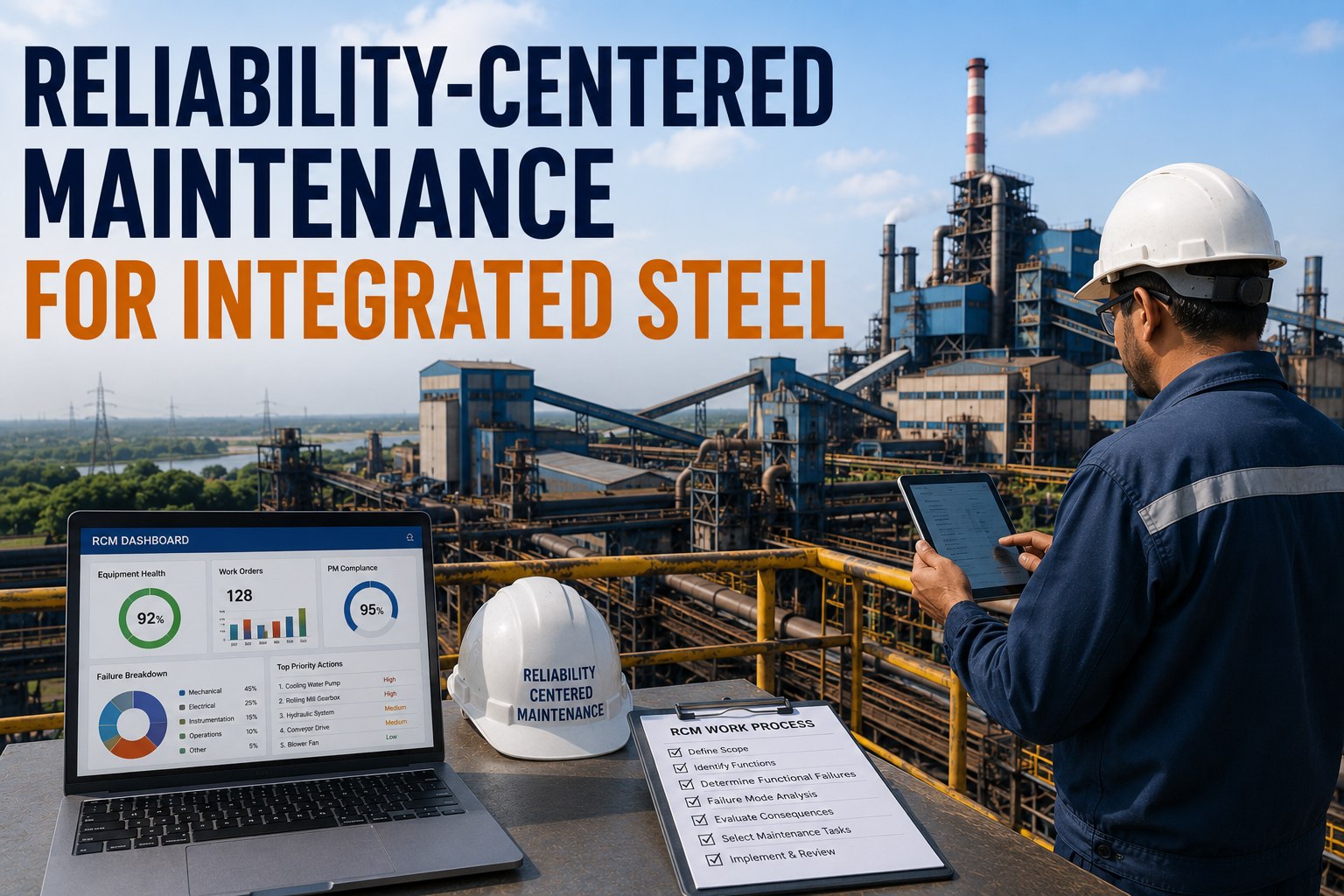
Reliability centered maintenance in cement plants is the systematic framework that moves maintenance teams from reactive firefighting to controlled, predictive asset care — and it is the single biggest lever for cutting unplanned downtime in an industry where a kiln stoppage can cost $50,000–$200,000 per day. Cement reliability programs built on RCM principles identify critical failure modes across crushers, mills, kilns, and conveyors, then match each asset to the right maintenance strategy: predictive, preventive, run-to-failure, or redesign. By applying cement maintenance best practices through a centralized CMMS like OxMaint, reliability leaders can automate work orders, track asset health in real time, and convert maintenance data into measurable downtime reduction. Ready to put these practices into daily action across every asset, technician, and shift? Start Free Trial and see how OxMaint operationalizes your RCM program from day one.
RCM FOR CEMENT OPERATIONS
What if your kiln, mill, and crusher ran 15% longer between unplanned stops?
Cement reliability-centered maintenance replaces firefighting with a structured, data-driven strategy. Identify critical failure modes, select the right maintenance mix for every asset, and cut unplanned downtime by 30–50% with OxMaint — the AI-powered CMMS built for heavy industrial reliability.
A single unplanned kiln stoppage at a mid-size cement plant can cost $200,000 in lost production, fuel, and restart energy. RCM — executed through OxMaint — targets the 20% of failure modes that cause 80% of that downtime.
RCM IMPLEMENTATION IN CEMENT
A 6-month roadmap for your cement RCM pilot project
Rolling out reliability centered maintenance in cement does not happen overnight. A structured RCM pilot — typically on a single line or critical asset group — proves value in 90–180 days before scaling plant-wide. Here is a proven month-by-month timeline.
Asset Criticality Ranking
Map the full asset hierarchy — from limestone crusher to clinker cooler to cement mill — and rank each asset by production impact, safety risk, and environmental exposure. OxMaint's asset tree makes this hierarchy auditable and permanent.
Failure Mode & Effects Analysis (FMEA)
For the top 20% of critical assets, document failure modes: bearing seizure on the kiln drive, refractory brick collapse, bag-house pressure drop. Capture failure frequency, detection difficulty, and severity for each.
Maintenance Strategy Selection
Match each failure mode to the right task: condition-based monitoring (vibration, thermography), time-based PM, or run-to-failure. OxMaint auto-schedules the selected strategy against each asset's work-order calendar.
PM Automation & Mobile Rollout
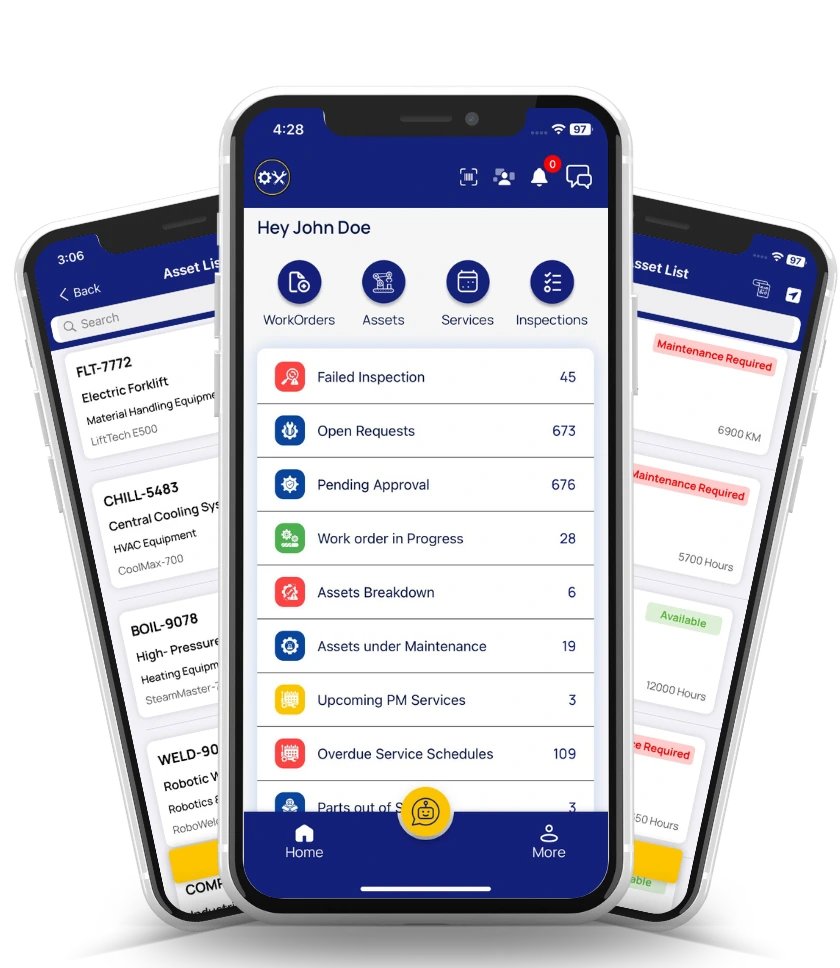
Migrate paper checklists and spreadsheet PMs into OxMaint's digital work orders. Technicians receive tasks on mobile devices, complete them offline on the shop floor, and log failure codes in real time.
Condition Monitoring Integration
Connect vibration sensors, oil analysis, and thermography data. OxMaint's predictive engine flags anomalies — a 3x rise in mill gearbox vibration — and auto-generates a corrective work order before failure.
Measure, Refine & Scale
Report MTBF, MTTR, and OEE deltas against the pilot baseline. Refine PM frequencies, eliminate redundant tasks, then scale the RCM program to the next production line.
CEMENT FAILURE PREVENTION
Top cement failure modes and the RCM strategies that prevent them
A cement plant's most damaging failures cluster around a handful of high-energy, high-throughput assets. Applying the wrong strategy — or no strategy — to these assets is where unplanned downtime originates.
| Asset | Critical Failure Mode | Root Cause | RCM Strategy | Detection Method |
|---|---|---|---|---|
| Rotary Kiln | Refractory brick collapse / shell hot spot | Thermal cycling, mechanical stress | Condition-based + Predictive | Shell scanner thermography |
| Ball Mill / Roller Mill | Gearbox bearing seizure | Lubrication degradation, misalignment | Predictive (CBM) | Vibration analysis + oil particulate |
| Preheater Cyclone | Blockage / coating buildup | Raw mix chemistry, low gas velocity | Time-based PM | Scheduled cleaning + pressure drop |
| Bucket Elevator | Chain break / sprocket wear | Tension loss, overload, fatigue | Preventive + Inspection | Visual + amperage trending |
| ID Fan / Cooler Fan | Impeller imbalance / vibration | Dust accumulation, bearing wear | Predictive (CBM) | Continuous vibration monitoring |
| Baghouse / ESP | Filter bag failure / emission spike | Bag fatigue, differential pressure | Run-to-failure + PM | Opacity monitor + dP sensor |
CEMENT MAINTENANCE OPTIMIZATION
The cost of reactive cement maintenance — and the RCM payback
Most cement plants still spend 50–60% of maintenance hours on reactive, unplanned work. RCM flips that ratio to 70–80% planned and predictive work — and the financial impact is immediate and compounding.
RCM Payback Formula for Cement Plants
Annual Savings = (Unplanned Downtime Hours Saved × $/hr Production Rate) + (Spare Parts Inventory Reduction) + (Overtime Labor Reduction)
A 180-asset cement grinding plant spending $42K/yr on reactive maintenance
A mid-size grinding facility running 180 critical assets faced 220 hours of unplanned downtime per year — primarily from mill gearbox and conveyor failures. After implementing an RCM pilot with OxMaint, the plant shifted 72% of maintenance to planned work. Vibration-triggered predictive alerts caught 3 bearing failures before seizure. Result: unplanned downtime dropped to 95 hours (a 57% reduction), saving $310,000 in lost production, cutting emergency parts spend by $18,000, and reducing contractor overtime by 22%.
HOW OXMAINT HELPS
How OxMaint powers your cement reliability program
RCM is a framework — OxMaint is the engine that runs it every day. From the limestone quarry to the cement silo, OxMaint turns your reliability strategy into automated, trackable, auditable maintenance action.
Asset Hierarchy & Criticality Tracking
Build a complete, ISO 55000-aligned asset tree — from the crusher to the packer. OxMaint stores criticality rankings, failure history, and documentation for every asset in one searchable, audit-ready system.
Automated PM & Predictive Work Orders
Auto-generate preventive maintenance based on runtime hours, calendar cycles, or condition triggers. OxMaint's predictive engine ingests sensor data and creates corrective work orders before failures occur.
Mobile Technician App
Eliminate paper work orders. Technicians receive, complete, and sign off PMs and corrective tasks on mobile devices — even offline in the kiln hall — with photo attachments and failure-code logging.
Reliability Analytics & KPI Dashboards
Live MTBF, MTTR, OEE, and PM compliance dashboards turn maintenance data into decisions. Identify your worst-performing assets and justify reliability investments with hard numbers.
See OxMaint on your assets — book a 30-min demo
Discover how cement plants use OxMaint to cut unplanned downtime 30–50%, automate PMs, and move from reactive firefighting to controlled reliability.
CEMENT RCM FAQ
Cement reliability-centered maintenance: frequently asked questions
What is reliability centered maintenance in cement plants?
Reliability centered maintenance (RCM) in cement plants is a structured methodology that identifies the critical failure modes of plant assets — kilns, mills, crushers, fans — and assigns the optimal maintenance strategy to each: predictive, preventive, or run-to-failure. The goal is to minimize unplanned downtime and maintenance cost while maximizing asset availability. OxMaint operationalizes RCM by automating the resulting maintenance plans, tracking asset health, and providing analytics to continuously refine the strategy.
How long does an RCM pilot project take in a cement plant?
A typical cement RCM pilot project takes 3 to 6 months. The first month is spent on asset criticality ranking and FMEA, followed by strategy selection, PM automation, and condition monitoring integration. OxMaint accelerates this timeline by providing a pre-built asset hierarchy, automated work-order scheduling, and mobile data capture, allowing teams to begin generating reliability data from week one. You can Start Free Trial to map your assets immediately.
What are the biggest benefits of RCM in cement manufacturing?
The primary benefits of RCM in cement manufacturing include a 30–50% reduction in unplanned downtime, a 15–20% decrease in overall maintenance costs, and improved equipment availability and OEE. RCM also extends the useful life of critical capital assets like kilns and mills, reduces spare parts inventory through better planning, and improves safety by reducing emergency breakdown interventions.
How does a CMMS support cement maintenance optimization?
A CMMS like OxMaint supports cement maintenance optimization by serving as the single system of record for asset hierarchies, work orders, PM schedules, spare parts inventory, and failure history. It automates preventive maintenance triggers based on runtime or condition data, mobilizes technicians with mobile work orders, and provides real-time dashboards on MTBF, MTTR, and PM compliance — turning the RCM strategy into daily, measurable action.
Which cement assets should be prioritized for an RCM program?
Prioritize assets with the highest impact on production, safety, and the environment — typically the rotary kiln, preheater tower, cement mill, raw mill, and critical ID fans. These assets have the highest downtime cost (a kiln stoppage can exceed $200K per event) and the most complex failure modes. Starting the RCM pilot with these high-criticality assets delivers the fastest and largest ROI, proving the program's value before scaling to secondary systems.
Ready to transform your cement maintenance strategy?
Join the cement plants using OxMaint to cut downtime, automate PMs, and build a data-driven reliability program. Start free or book a personalized demo today.
Free 14-day trial · No credit card