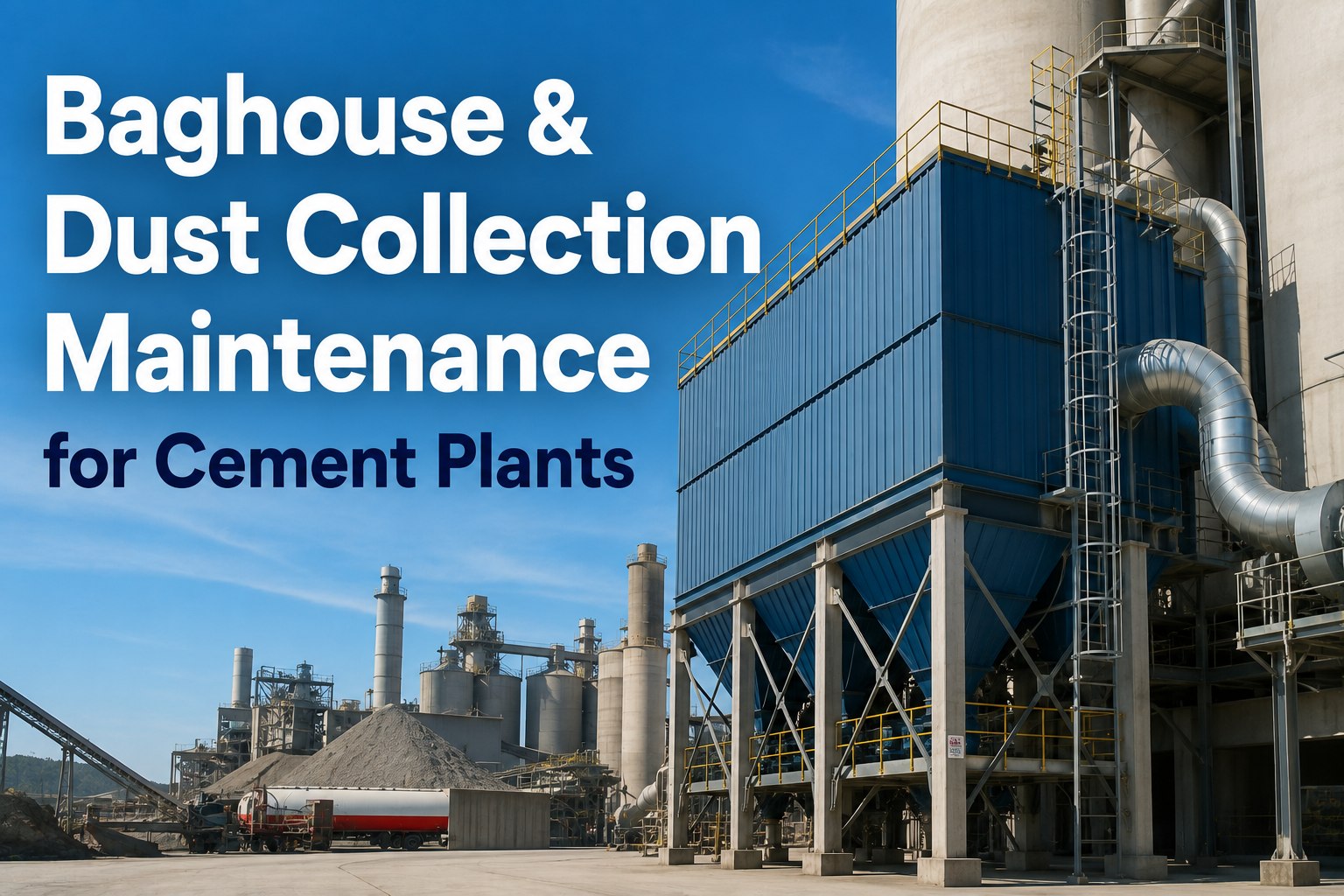
Baghouse and dust collection maintenance is the single most important factor keeping cement plants compliant with EPA emissions limits, protecting downstream equipment, and controlling energy costs. When filter bags blind over, pulse-jet cleaning systems underperform, or differential pressure (DP) climbs unchecked, a cement baghouse can fail a stack test, trigger a Notice of Violation, and spike fan-energy consumption by 20% or more. A well-structured baghouse maintenance program — backed by CMMS-driven work orders, DP monitoring, and scheduled bag inspections — keeps cement dust collection systems reliable and emissions compliance defensible on every stack test. OxMaint brings all of that into one AI-powered CMMS platform, and you can Start Free Trial to see how quickly your environmental and maintenance teams can transition from reactive fixes to a predictive, audit-ready baghouse program.
One failed stack test can cost $50K+ in penalties — is your baghouse program defensible?
Cement plants lose millions to unplanned baghouse outages, blinded filter bags, and failed emissions compliance. OxMaint's CMMS-driven baghouse maintenance program tracks bag inspections, monitors differential pressure, schedules pulse-jet cleaning PM, and keeps every stack test audit-ready.
Why baghouse maintenance is mission-critical for cement plants
A cement plant operating a 500,000 ACFM baghouse with blinded bags can see fan-power costs jump $40,000–$60,000 per year — before any regulatory penalty is factored in.
Blinded filter bags raise DP, forcing ID fans to draw significantly more power to maintain draft.
A single failed stack test or opacity excursion can trigger Notices of Violation and six-figure fines.
Without tracked PM and cleaning-system optimization, filter bag life can drop by 30–50%.
A compartment failure with no spare bags staged can idle kiln or finish-mill production for days.
A mid-size cement plant running two kiln baghouses (12 compartments, 2,400 bags total) was spending $48,000 annually on emergency bag replacements and fan-energy surcharges. Reactive changes blinded 18% of bags within 14 months. After implementing OxMaint for scheduled bag inspections, DP-threshold-triggered work orders, and pulse-valve PM cycles, the plant extended average bag life to 32 months, cut DP-related fan-energy cost by 14%, and passed three consecutive stack tests with zero compliance findings — a $61,000 annual turnaround.
Cement baghouse maintenance checklist: bags, dampers & cleaning systems
A defensible baghouse program breaks maintenance into three tiers — daily monitoring, scheduled preventive tasks, and annual integrity inspections — all driven by CMMS work orders.
Monitoring & Walkdowns
- Record DP readings for each compartment; flag anything above 6 in. w.g.
- Check stack opacity trends for sudden spikes above 10%
- Verify pulse-jet cleaning cycles are firing on all solenoid banks
- Inspect clean-air plenum for visible dust leaks
- Confirm damper positions and fan-amp readings are within baseline
Cleaning System PM
- Test and clean pulse-jet solenoid valves; replace faulty coils
- Inspect diaphragm valves for wear, sticking, or air leaks
- Verify compressed-air dew point and pressure at the header
- Lubricate damper linkages and check actuator travel
- Clean differential pressure transmitters and impulse lines
Bag & Compartment Integrity
- Enter each compartment; visually inspect bag tension and cages
- Identify blinded, burned, or abraded bags; log bag positions in CMMS
- Perform bag leak testing (fluorescent dye or dust-flash method)
- Replace bags reaching end of calculated service life proactively
- Inspect tube sheet for corrosion, cracks, and weld integrity
Filter bag maintenance & baghouse reliability: what actually controls bag life
Filter bag life in a cement baghouse is governed by four interlocking variables. Track and control each one, and a 2-year bag becomes a 3.5-year bag.
If any factor drops — e.g., cleaning efficiency falls to 70% because 3 solenoid valves fail — effective bag life can collapse from 36 months to under 15. OxMaint flags the failed valves as a PM priority before the bags pay the price.
| Reliability Factor | Failure Mode | Impact on Bag Life | CMMS Trigger |
|---|---|---|---|
| Pulse-Jet Cleaning | Failed solenoid / stuck diaphragm valve | −40 to −60% localized blinding | Auto work order at 72 hr no-fire |
| Differential Pressure | DP sustained above 6 in. w.g. | Accelerated fabric fatigue | Threshold alert + inspection WO |
| Inlet Temperature | Excursion above bag rating (e.g., 275°F on polyester) | Permanent bag damage in hours | SCADA integration alarm |
| Compressed Air Quality | Moisture or oil in pulse air | Blinding + corrosion on cages | Quarterly air-quality PM task |
| Spare Bag Inventory | No replacement bags staged | 3-day+ unplanned outage | Min-stock reorder alert |
How OxMaint powers your cement baghouse maintenance program
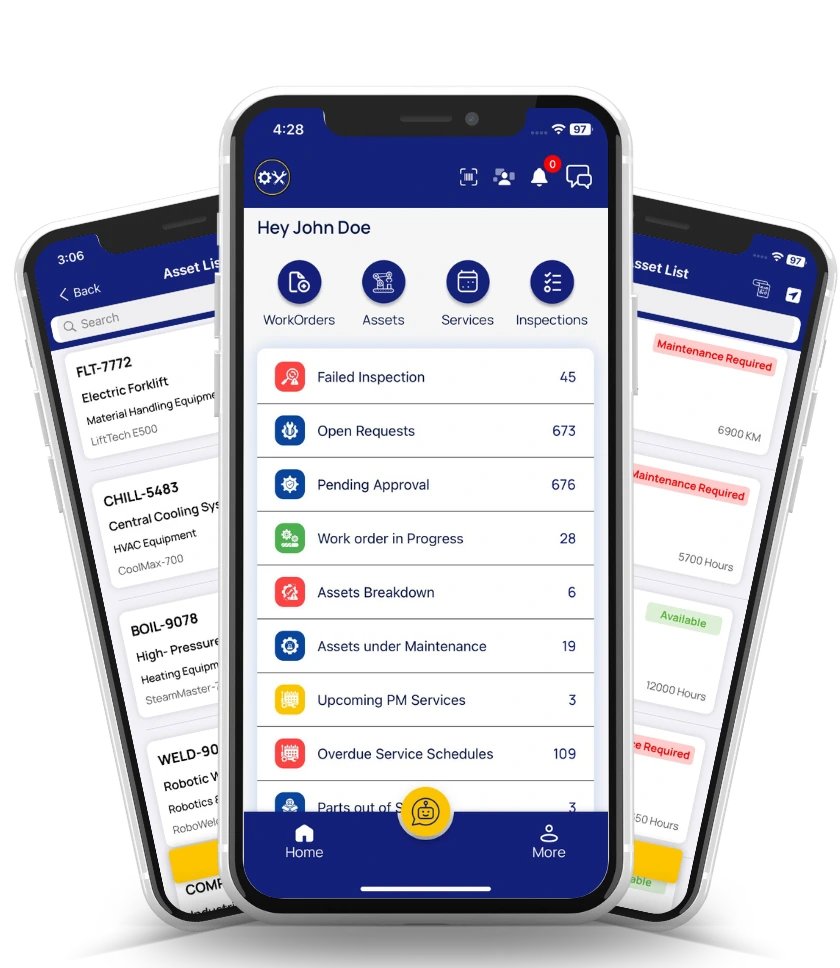
OxMaint turns baghouse maintenance from a clipboard-driven scramble into a CMMS-driven, audit-ready program — connecting DP monitoring, bag life tracking, and spare-parts inventory in one AI-powered platform.
DP-Triggered Work Orders
OxMaint ingests differential pressure data and automatically generates inspection work orders when any compartment crosses your DP threshold — catching blinding before it spreads.
Bag Life Asset Tracking
Every filter bag, cage, and compartment is tracked as an asset with install date, material spec, and service-life projection — so you replace bags on schedule, not after a failure.
EPA Compliance Audit Trail
Every PM task, bag change, DP reading, and inspection is time-stamped and attributable. When EPA inspectors ask for maintenance records, you export a defensible history in seconds.
Spare-Parts Inventory Automation
OxMaint tracks filter bag stock, cage quantities, solenoid valves, and diaphragm kits with minimum-level reorder alerts — so a compartment failure never waits on procurement.
How to build a CMMS-driven baghouse program in 4 phases
Transitioning from reactive baghouse repairs to a predictive, compliance-ready program takes one quarter of focused implementation — not a multi-year capital project.
Asset & Data Baseline
Import all baghouse compartments, filter bag inventories, pulse-jet valve banks, and damper assets into OxMaint. Set baseline DP readings, bag install dates, and material specs for every cell.
PM Schedules & Triggers
Build preventive maintenance schedules for solenoid testing, diaphragm inspection, compressed-air quality checks, and quarterly compartment walkdowns. Configure DP-threshold triggers that auto-generate work orders.
Inventory & Reorder Logic
Set min-stock levels for bags, cages, valves, and gaskets. Link spare-parts consumption to work orders so reorder alerts fire automatically and outage readiness is visible on one dashboard.
Predictive & Audit-Ready
OxMaint's AI analyzes DP trends, cleaning-cycle anomalies, and bag-life data to predict failures before they happen. Export defensible compliance records for every stack test and EPA inspection.
See OxMaint on your baghouse assets — book a 30-minute demo
Walk through a live baghouse maintenance program: DP-triggered work orders, bag-life tracking, compliance audit trails, and spare-parts automation built for cement plants.
Cement baghouse maintenance: frequently asked questions
How often should filter bags be inspected in a cement plant baghouse?
Filter bags should receive a visual compartment inspection quarterly and a full integrity inspection during annual plant outages. However, differential pressure should be monitored continuously, and any compartment sustaining DP above 6 in. w.g. should trigger an immediate inspection work order. OxMaint automates this by generating inspection tasks when DP thresholds are crossed, so no bag goes unchecked between scheduled walks. Book a demo to see the trigger workflow.
What causes filter bag blinding in cement dust collection systems?
The most common causes of bag blinding are failed pulse-jet cleaning solenoids, moisture in the compressed-air supply, inlet gas temperatures below the acid dew point, and oversized or sticky particulate from kiln chemistry upsets. When cleaning cycles miss even a few cells, dust packs onto the bag surface and DP climbs rapidly. A CMMS like OxMaint catches the root cause — a failed solenoid or low air pressure — before blinding becomes permanent.
How does a CMMS improve EPA emissions compliance for cement baghouses?
A CMMS creates a time-stamped, attributable record of every maintenance action — bag changes, valve replacements, DP readings, and inspections — that environmental regulators expect to see during a stack test or compliance audit. OxMaint stores this history per asset and per compartment, so when EPA inspectors request maintenance documentation, your team exports a complete, defensible report in seconds rather than scrambling through paper logs.
What is the typical service life of a filter bag in a cement baghouse?
In a well-maintained cement baghouse, standard polyester filter bags typically last 2–3 years, while acrylic or P84 blend bags can reach 3–4 years under optimal conditions. Poor cleaning-system maintenance, temperature excursions, and moisture ingress can cut that life by 30–50%. Tracking each bag's install date and service conditions in OxMaint lets you replace bags proactively at 80% of projected life rather than reacting to failures.
How long does it take to implement OxMaint for baghouse maintenance?
Most cement plants are fully live on OxMaint for baghouse maintenance within 30–45 days. The implementation includes importing baghouse asset hierarchies, configuring PM schedules and DP-trigger thresholds, setting spare-parts min-stock levels, and training maintenance and environmental teams. You can Start Free Trial today and begin building your baghouse asset registry immediately, or schedule a guided onboarding with our team.
Stop reacting to baghouse failures. Start preventing them.
Join cement plants using OxMaint to extend filter bag life, pass every stack test, and eliminate unplanned baghouse outages — all from one AI-powered CMMS.
Free 14-day trial · No credit card